Tag: Around the World

Hiking in Canada? We’ve got you covered

If you’re someone from North America who plans to trek the rugged trails of the Himalayas, Andes, Patagonia or if you’re simply a fellow Canadian friend of ours who just wants some exercise, this post is for you. There’s no better place to get some fresh air than Canada’s stunning and demanding wilderness. So forget the treadmill; the key to successful trekking is long days, serious elevation, and an uneven, rocky trail.

The Canadian mountains, especially the Rockies and the Coast Mountains, are your perfect high-altitude prep school. Here are a few top-tier Canadian hikes that will forge the endurance, leg strength, and mental grit you need for your next big adventure.


The Canadian Rockies
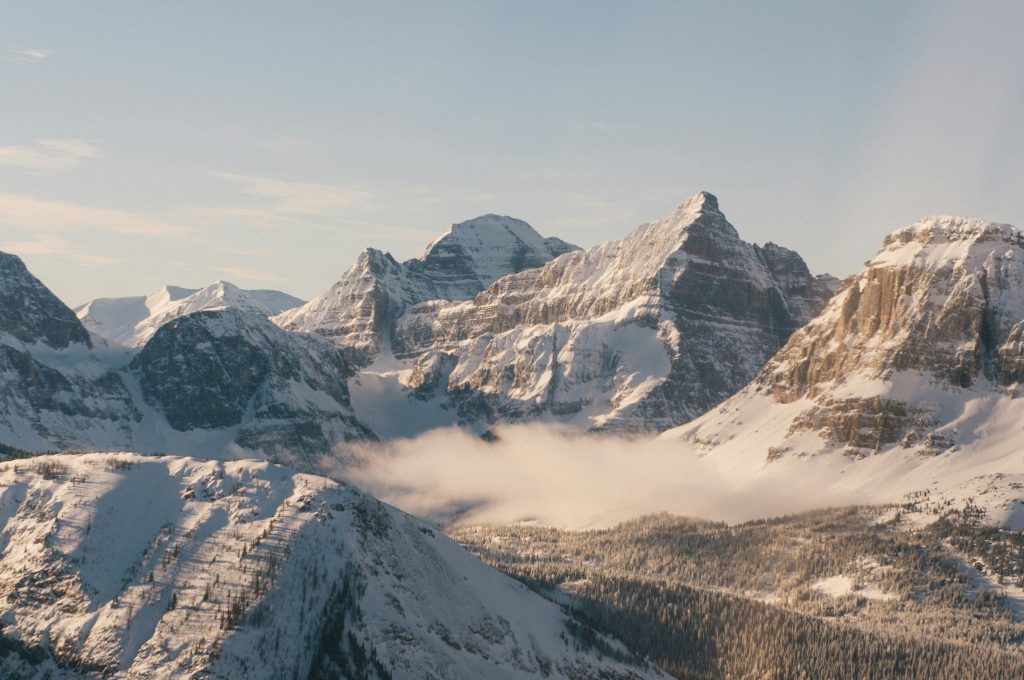
The Canadian Rockies/Canadian Rocky Mountains is the Canadian segment of North America’s Rocky Mountains, straddling the provinces of British Columbia (BC) and Alberta. They are famous for their sheer, intimidating peaks and offer some of the best-sustained climbing and multi-day treks to simulate the demands of high-altitude travel.

1. The Iceline Trail – Yoho National Park, BC

  • The Vibe: A breathtaking day hike or overnight loop that takes you into the alpine zone, right up close to glaciers and icefields.
  • Why it Preps You: It’s a gut-busting ascent right from the start, providing a significant elevation gain over a short distance. This is perfect for training your body to hike hard when your legs are already tired. The views are so rewarding you’ll forget you’re training!
  • Training Focus: Steep ascents and uneven terrain with a full pack if you do the overnight loop.

2. The Skyline Trail – Jasper National Park, AB

  • The Vibe: One of the most famous long-distance trails in the Rockies. Over two to four days, the majority of the hike is spent above the treeline—a fantastic simulation of high-altitude exposure (without the low oxygen).
  • Why it Preps You: This trail will test your endurance over multiple days of sustained effort with a full pack. You’ll cover long distances, tackle varied terrain (including a high pass), and experience unpredictable weather—all essential for a major trek.
  • Training Focus: Multi-day endurance, pack weight management, and mental resilience in exposed landscapes.

3. Sentinel Pass – Banff National Park, AB

  • The Vibe: A popular but spectacular day hike near Moraine Lake, known for the Larch Valley in the fall (a must-see!).
  • Why it Preps You: The trail features a long, steady climb followed by an incredibly steep series of switchbacks up to the pass. This forces you to use the “trekker’s pace”—slow, steady, and relentless—which is the key to conquering high passes elsewhere in the world.
  • Training Focus: Slow-and-steady pacing on steep grades and high-step leg work.

Coastal & Western Canada: Rugged and Technical

For a different type of challenge that focuses on technical footwork, long climbs through dense forests, and a true test of grit, look to the Coast Mountains.

4. The Grouse Grind – Vancouver, BC

  • The Vibe: Affectionately known as “Nature’s Stairmaster,” this is a punishing 2.9 km trail straight up Grouse Mountain.
  • Why it Preps You: While it’s short, it’s a pure, relentless cardio burn with a massive elevation gain in a small package. This is a non-stop leg and lung workout that will improve your cardiovascular fitness faster than almost anything else. It’s the perfect mid-week training hit.
  • Training Focus: Cardiovascular capacity and stair-climbing strength (great for those long days of ascent).

5. West Coast Trail – Pacific Rim National Park, BC

  • The Vibe: A world-renowned 75 km backpacking route along the rugged and often muddy coastline of Vancouver Island.
  • Why it Preps You: This trek is a total body workout that demands balance, core strength, and technical foot placement. You’ll be climbing up and down hundreds of ladders, navigating deep mud, crossing rivers, and scrambling over root systems. If you can handle the WCT, you can handle almost any trail.
  • Training Focus: Technical balance, core strength, and all-weather preparation.

The Trek Prep Checklist

Your Canadian training hikes aren’t just about fitness; they’re about dialing in your trek strategy.

  • Test Your Gear: Treat your training hikes like mini-expeditions. Wear your trekking boots (break them in!), use your trekking poles, and pack the backpack you plan to take overseas with a similar weight. Find out what chafe points need addressing now, not on day three of your main trek.
  • Practice Your Pace: The secret to high-altitude trekking is being “unpleasantly comfortable.” You should be able to hold a conversation while hiking. Use Canada’s tough climbs to find and maintain that steady, conversational pace.
  • Eat and Drink: Practice eating and drinking on the move. Dehydration and under-fueling are trip killers. Get used to consuming two to three litres of water and calorie-dense snacks throughout the day.

Lace up those boots! The world’s great trails are waiting, and your Canadian training ground is the perfect place to get ready.
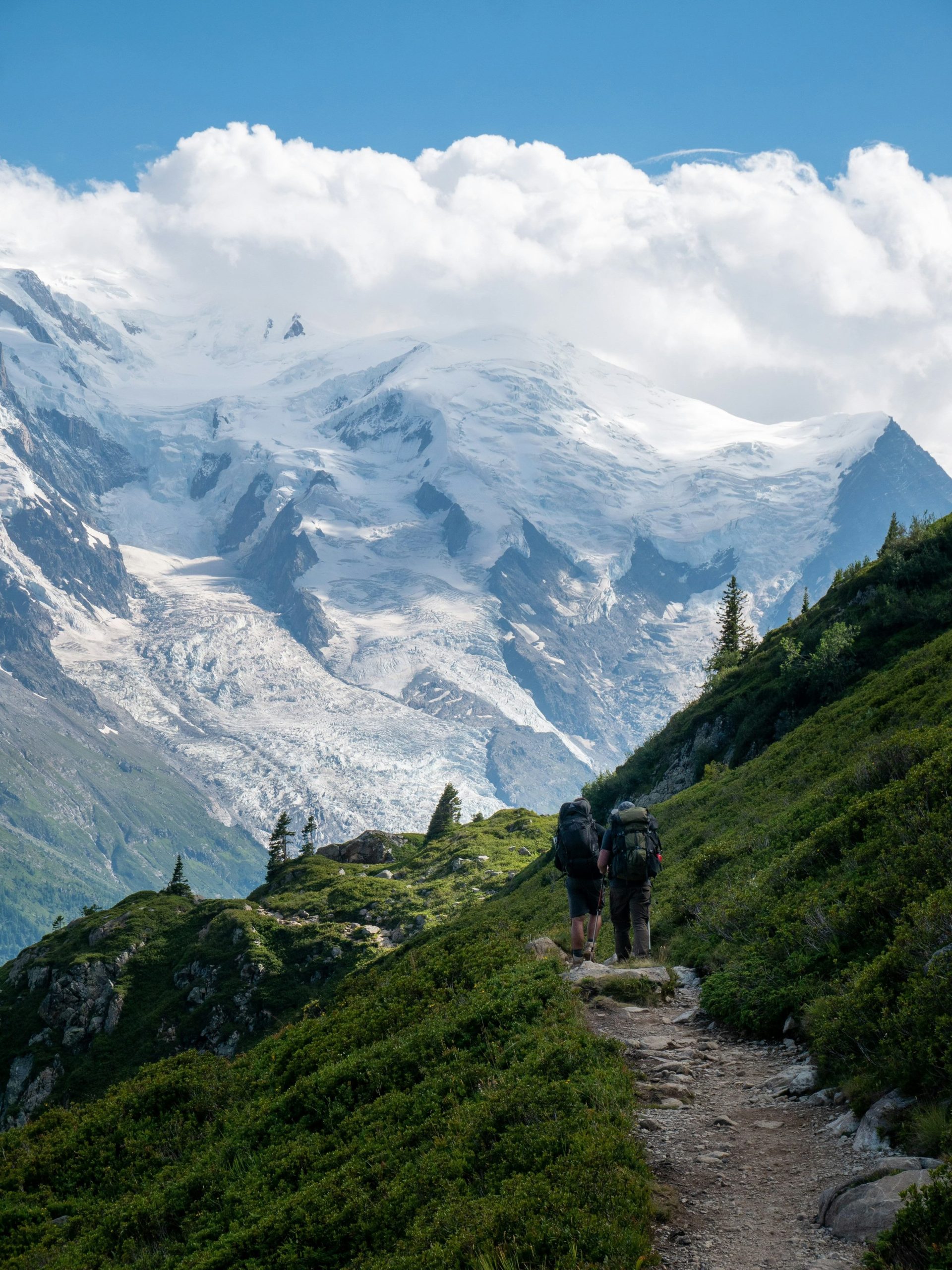
Mont Blanc: Roof of the Alps

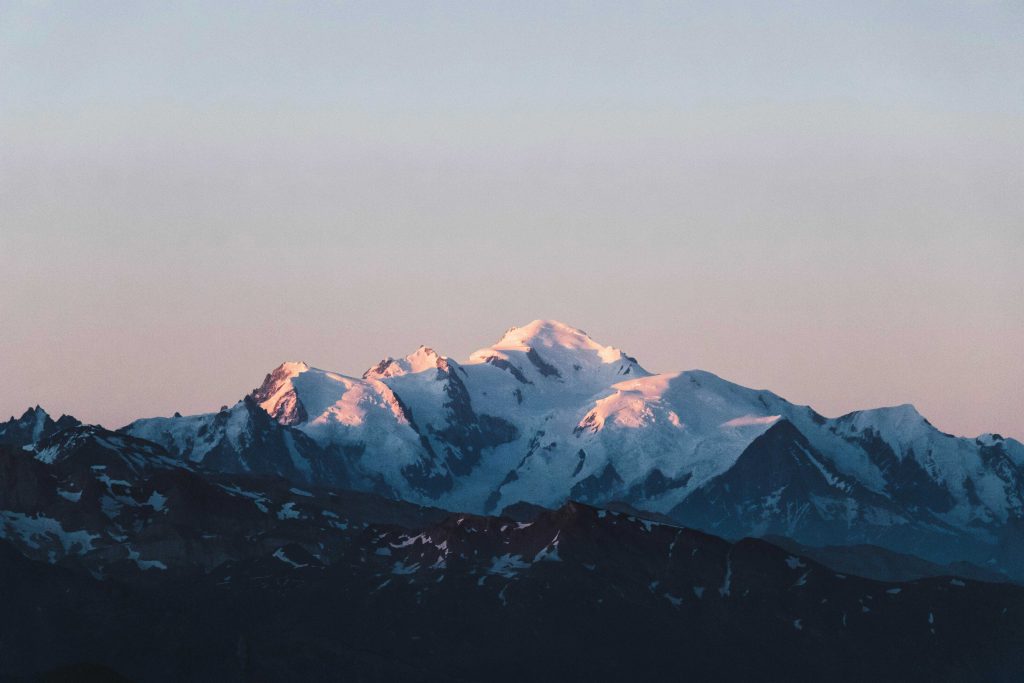
This snow, jagged peak is the quintessential challenge of the Alps. The highest in Western Europe, Mont Blanc (simply White Mountain or Monte Bianco in Italian) is a massif straddling the borders of France and Italy, with its vast shadow touching Switzerland as well. It’s the birthplace of modern mountaineering and a mecca for outdoor enthusiasts worldwide.

The Crown of the Alps: The Facts

Standing at an elevation of approximately 4,809m (15,777 ft), Mont Blanc’s height is constantly shifting due to its permanent ice and snow cap. It’s a geological marvel, predominantly formed from a massive granite intrusion.

The mountain’s human history is just as grand. The first recorded ascent in 1786 by Jacques Balmat and Dr. Michel-Gabriel Paccard, is traditionally marked as the beginning of modern mountaineering. Today, around 20,000 climbers attempt the summit annually, a testament to its enduring allure.

The Ultimate Alpine Adventure: The Tour du Mont Blanc (TMB)

While summiting Mont Blanc is a serious mountaineering undertaking, the region is most famous for a different kind of challenge: the Tour du Mont Blanc (TMB), which on the contrary is not a climb up the mountain, but a legendary 170km (106-mile) circuit that winds around the entire massif, offering hikers an unparalleled journey through three countries: France, Italy, and Switzerland.

What to Expect on the TMB:

  • Three Countries, One View: The trail treats you to the distinct cultures, cuisines, and architectural styles of the Chamonix Valley in France, the Aosta Valley in Italy (home to the picturesque town of Courmayeur), and the Val Ferret in Switzerland.
  • Epic Views and Terrain: You will traverse high alpine passes, skirt colossal glaciers, wander through lush meadows dotted with wildflowers, and pass by charming stone hamlets. The cumulative elevation gain and loss is close to 10,000 meters (about 32,800 feet)—a serious, but immensely rewarding, physical challenge.
  • Duration: The classic TMB itinerary is typically completed in 10 to 12 days, hiking stage-by-stage and staying in mountain huts (known as refuges in France and Italy) or valley accommodations. Faster hikers can complete it in 7-9 days, while more leisurely trekkers might take up to 14.
  • Refuge Life: A highlight of the TMB is the mountain hut experience. Imagine arriving at a cozy refuge after a long day, sharing a hearty, traditional meal with fellow trekkers from around the world, and sleeping under a million stars. It’s a genuine taste of alpine life.

Planning Your Mont Blanc Trek

Thinking of tackling the TMB? Here are the essentials:

  1. When to Go: The peak hiking season is mid-June to mid-September.
    • Early Season (June): Quieter, but you may encounter more snow on the high passes, requiring caution and possibly extra gear. Wildflowers are at their best.
    • Peak Season (July & August): Warmest weather and guaranteed clear trails, but also the busiest months on the trail and in the accommodations.
    • Late Season (September): Excellent for avoiding crowds, with stable weather and often crisp, clear days, but some huts may begin to close after the first or second week.
  2. Direction: Most people hike counter-clockwise, starting from a point like Les Houches or Chamonix in France. However, hiking clockwise is a great way to avoid the majority of the crowds.
  3. Logistics: The TMB can be done independently, booking refuges and carrying all your gear (or utilizing baggage transfer services), or as part of a guided tour. Booking accommodation well in advance is crucial, especially for the high season.

Beyond the TMB

The Mont Blanc massif offers much more than just the circuit trek:

Aiguille du Midi: Don’t miss the thrilling cable car ride from Chamonix to the Aiguille du Midi station (3,842m), where you can step out onto a glass box (“Step into the Void”) for a breathtaking view of the Mont Blanc peak.

Day Hikes: Iconic day hikes abound, such as the trek to Lac Blanc, famous for its stunning reflection of the Mont Blanc chain.

Chamonix: The vibrant valley town of Chamonix is the adventure capital of the Alps, offering world-class climbing, paragliding, and trail running.

Mont Blanc is a spectacle that captures the soul and defines the majesty of the high Alps. It awaits your footsteps, ready to inspire.

Aconcagua: the Stone Sentinel

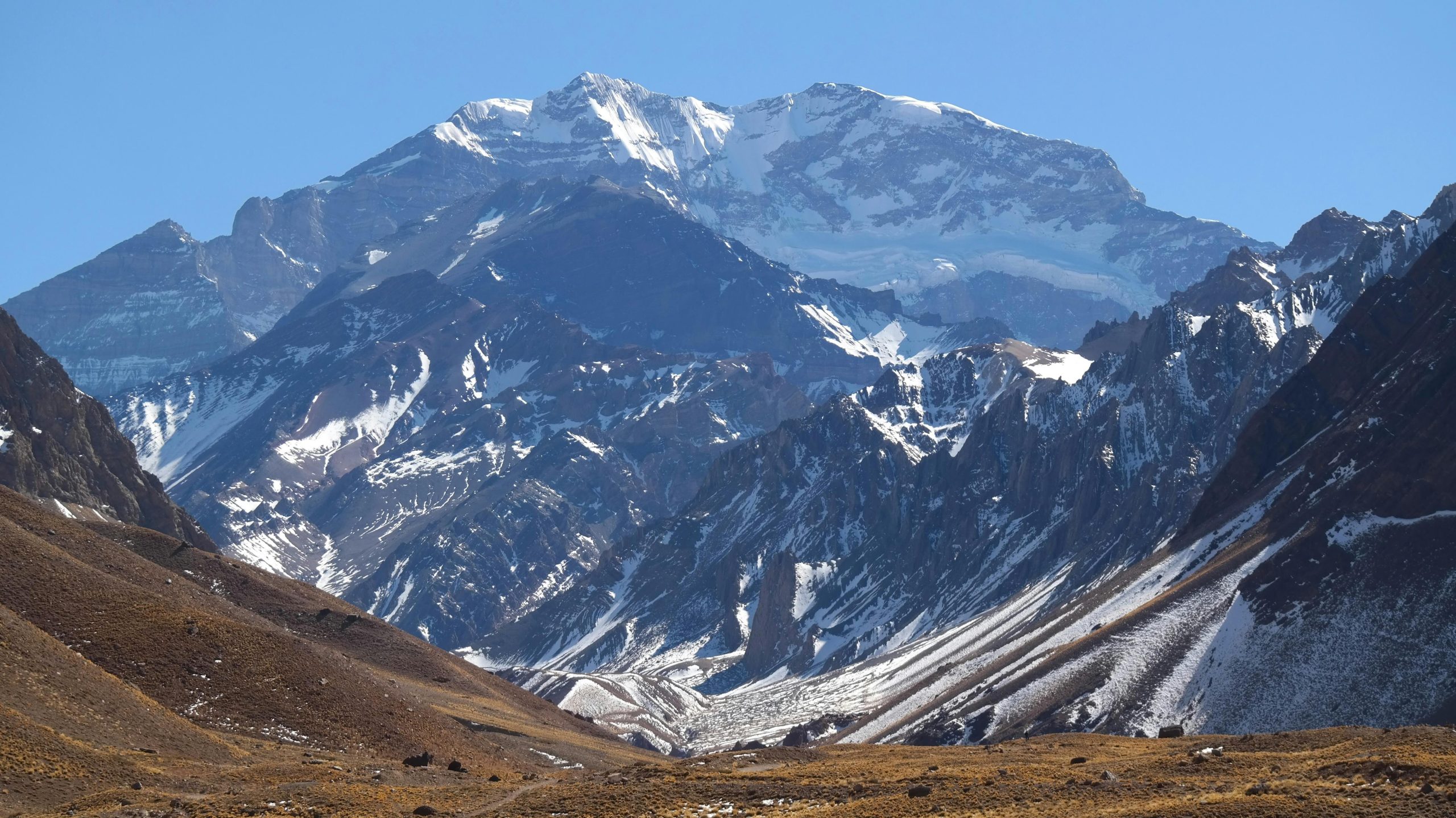
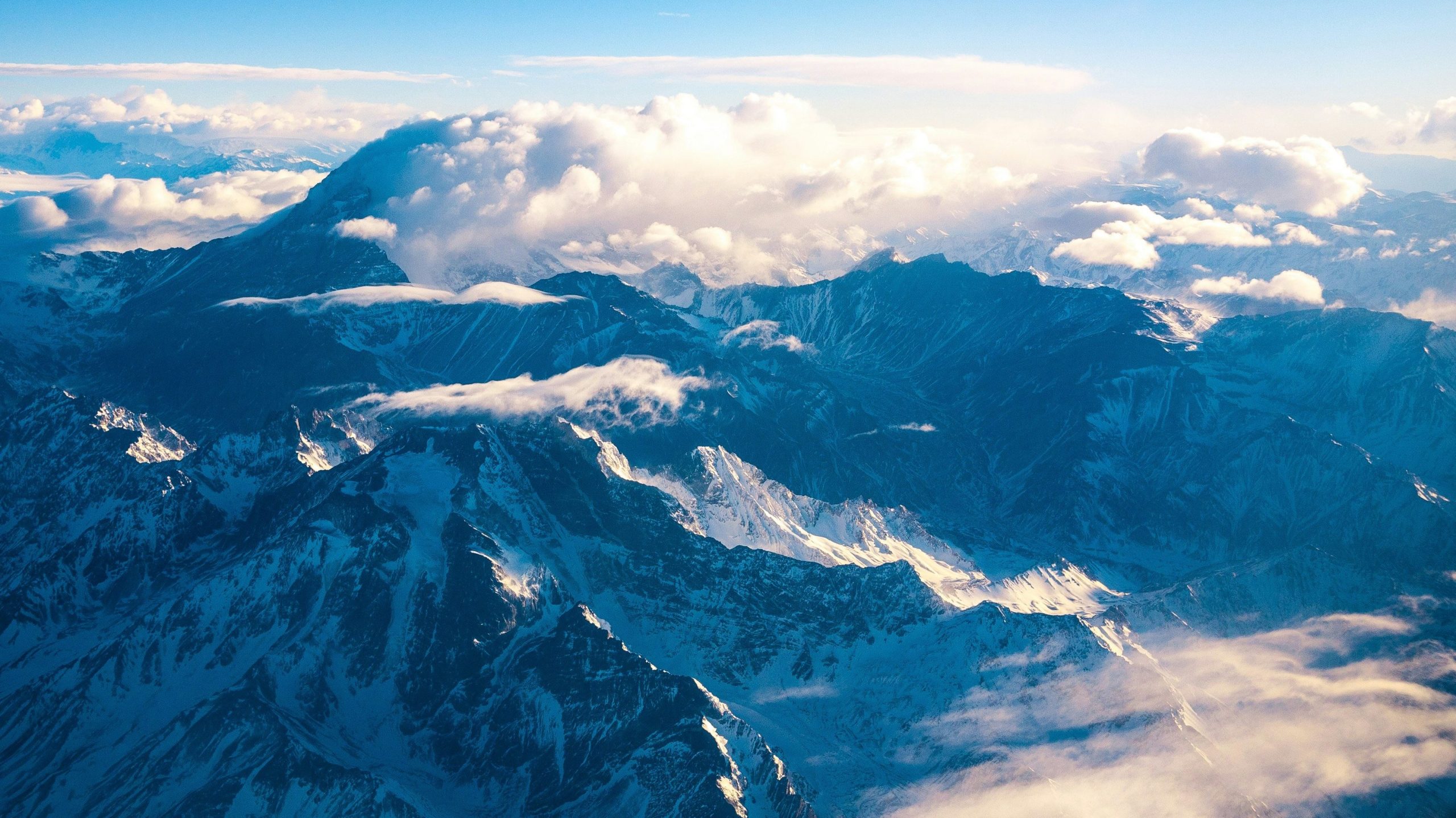
Rising to a staggering 6,961m (22,838 ft), Aconcagua commands attention as the world’s highest mountain outside of the Himalayas and the apex of the famed Seven Summits. Located in the Principal Cordillera in Mendoza Province of Argentina, this giant of the Andes spans across the western edge of South America, drawing climbers from every corner of the globe.

The Mountain of Misconception

Aconcagua carries the grim nickname, The Mountain of Death, and is believed to have the highest death rate of any mountain in South America – averaging around three fatalities each year.

Despite this treacherous name and its immense elevation, Aconcagua is often referred to as a non-technical trekking peak. The perception that it is easy is its greatest danger. Its Normal Route doesn’t require the use of fixed ropes, technical ice axes, or advanced mountaineering skills. This reputation has led experts to consider it a popular starter mountain for those hoping to conquer the Seven Summits.

The True Challenge: Altitude and Exposure

While the climbing may be non-technical, the sheer altitude and brutal conditions elevate Aconcagua into a serious challenge:

  • Extreme Altitude: At nearly 7,000 meters, climbers enter the “death zone” where the body struggles to acclimatize. Failure to respect the climb’s height is the primary reason for failure and tragedy.
  • Vicious Winds: The mountain is highly exposed to violent, high-altitude winds known as the Viento Blanco (White Wind). These storms can drop temperatures dramatically and create whiteout conditions that force immediate retreats.
  • The Power of Weather: Climbers must carry heavy loads, dealing with sustained exposure to extreme cold and harsh weather for weeks, testing their mental and physical endurance far beyond a standard hike.

A Himalayan Analogy: Training for the Giants

Aconcagua’s profile is somewhat comparable to Nepal’s Mera Peak for fit trekkers seeking a high-altitude experience without the prerequisite of technical climbing experience. Both mountains share the need for excellent physical condition and, crucially, a meticulous approach to acclimatization and safety.

A bucket-list climb for any serious adventurer, Aconcagua stands as a powerful reminder: on the world’s great mountains, non-technical does not mean non-lethal. Respect for the altitude, proper preparation, and expert guidance are non-negotiable for success on any of the world’s highest peaks.