Tag: Nepal

Getting to Annapurna Base Camp

Often overshadowed by its Everest cousin, the Annapurna Base Camp trek offers a strikingly different, yet equally profound, Himalayan experience. The journey will take you through lush rhododendron forests, charming Gurung villages, and eventually into a breathtaking natural amphitheater circled by 7,000m and 8,000m peaks. You’ll swap thin, cold air for humid warmth and exposed barrenness for vibrant greenery, all while gaining indelible memories.
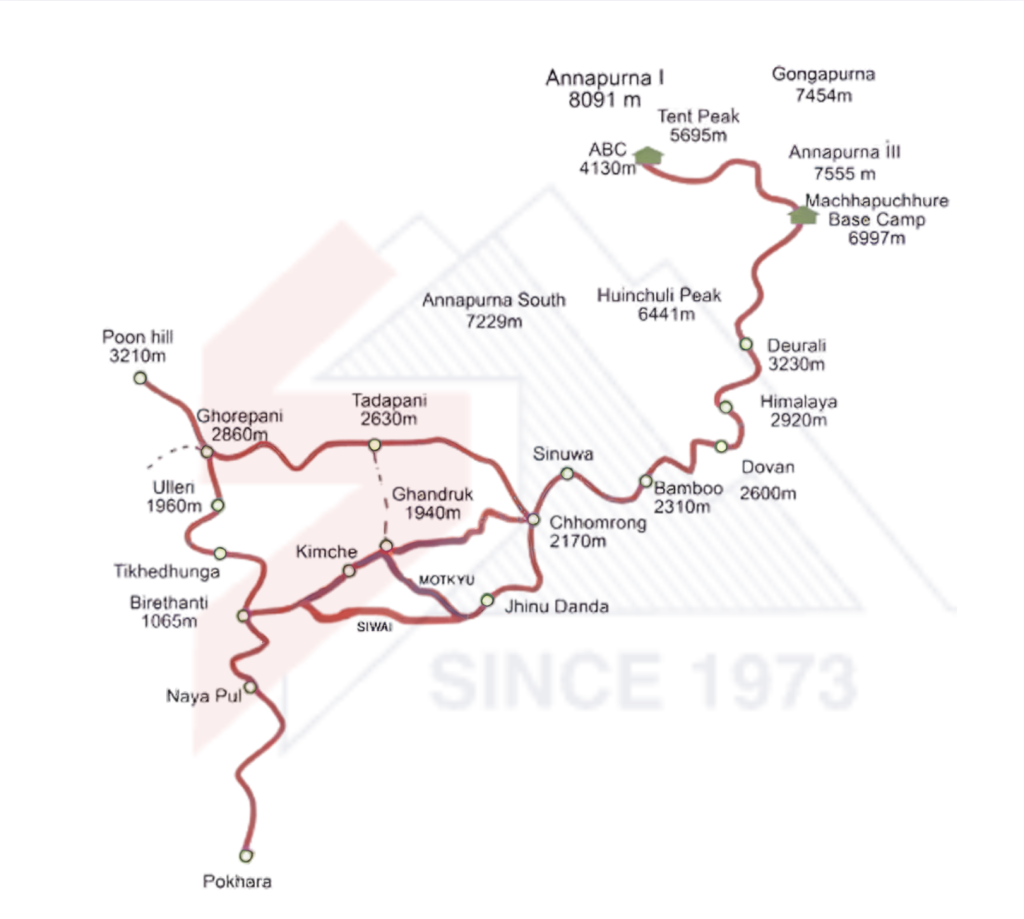

Nayapul / Ghandruk (Approx. 1,070m / 2,012m)
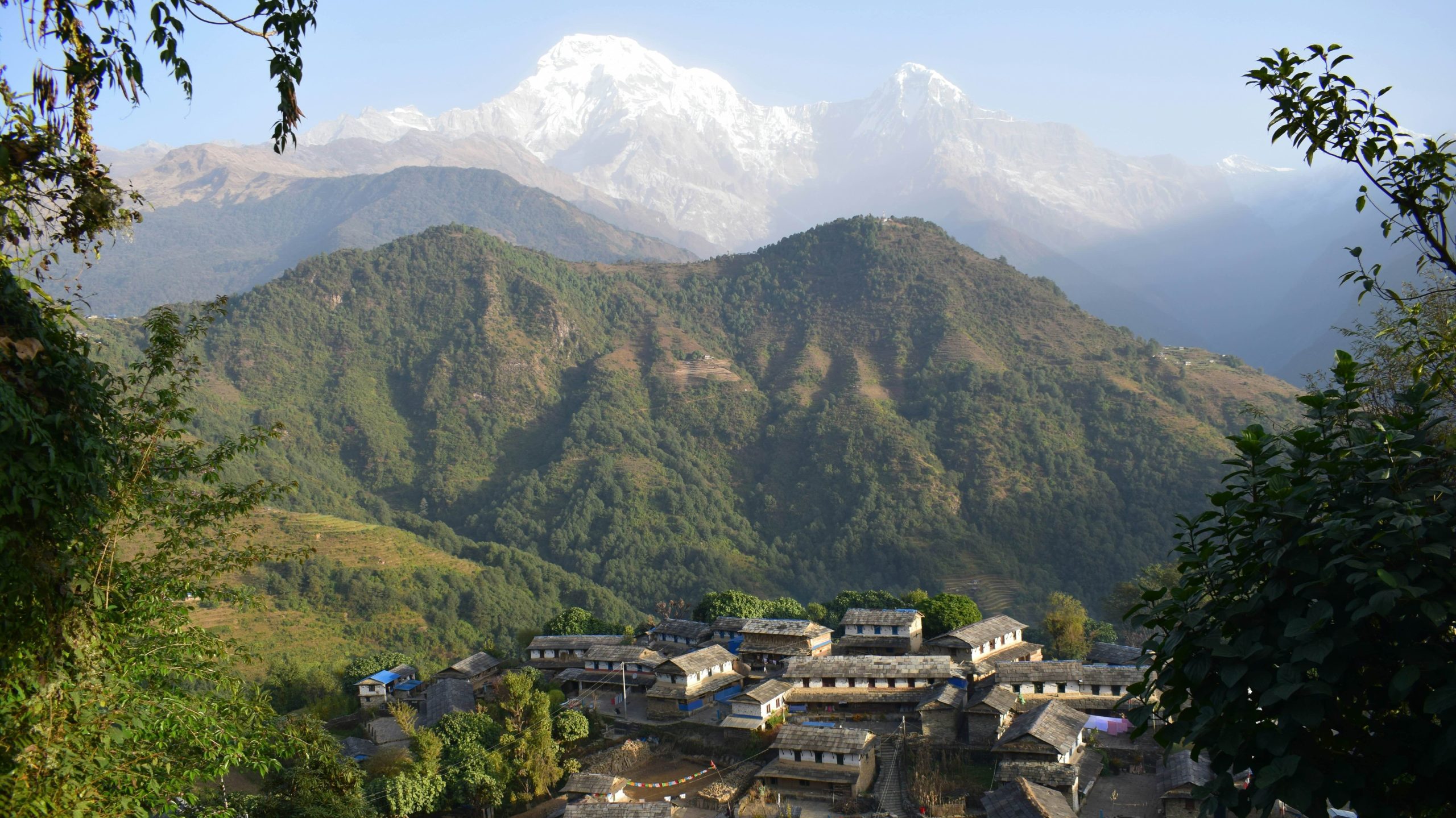
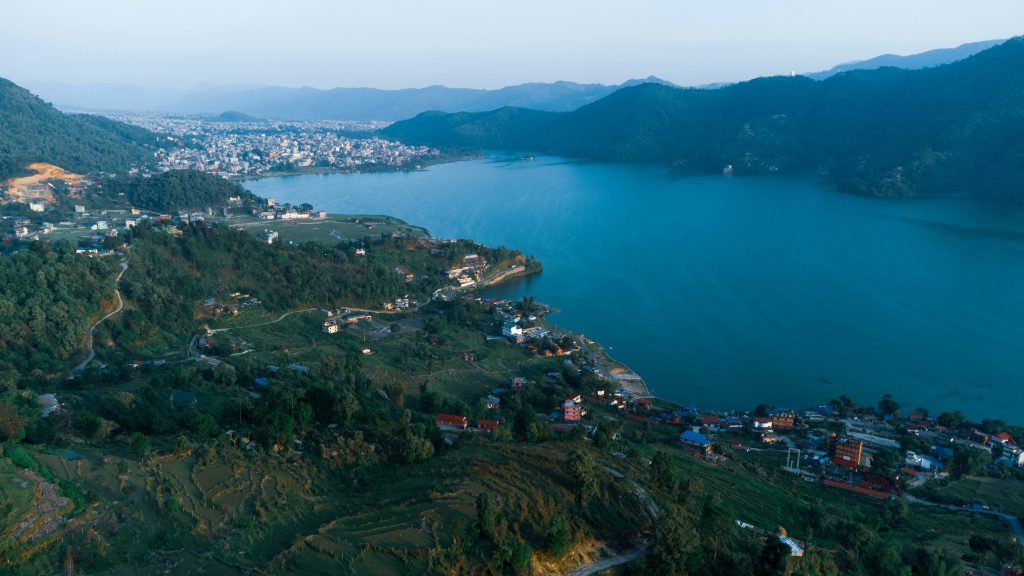
Your adventure begins not with a dramatic mountain flight, but with a gentle immersion into Nepal’s mid-hills. Often starting from Nayapul, you’re soon enveloped by terraced rice fields and the sounds of rushing rivers. Many treks quickly ascend to Ghandruk, a picturesque, traditional Gurung village. Here, stone houses cling to hillsides, rhododendron blooms splash vibrant colors, and the first tantalizing glimpses of Annapurna South and Machhapuchhre (Fishtail) peek through, hinting at the giants to come. This initial stretch is a verdant welcome, a gentle easing into trekking life.


Chhomrong (2,170m)

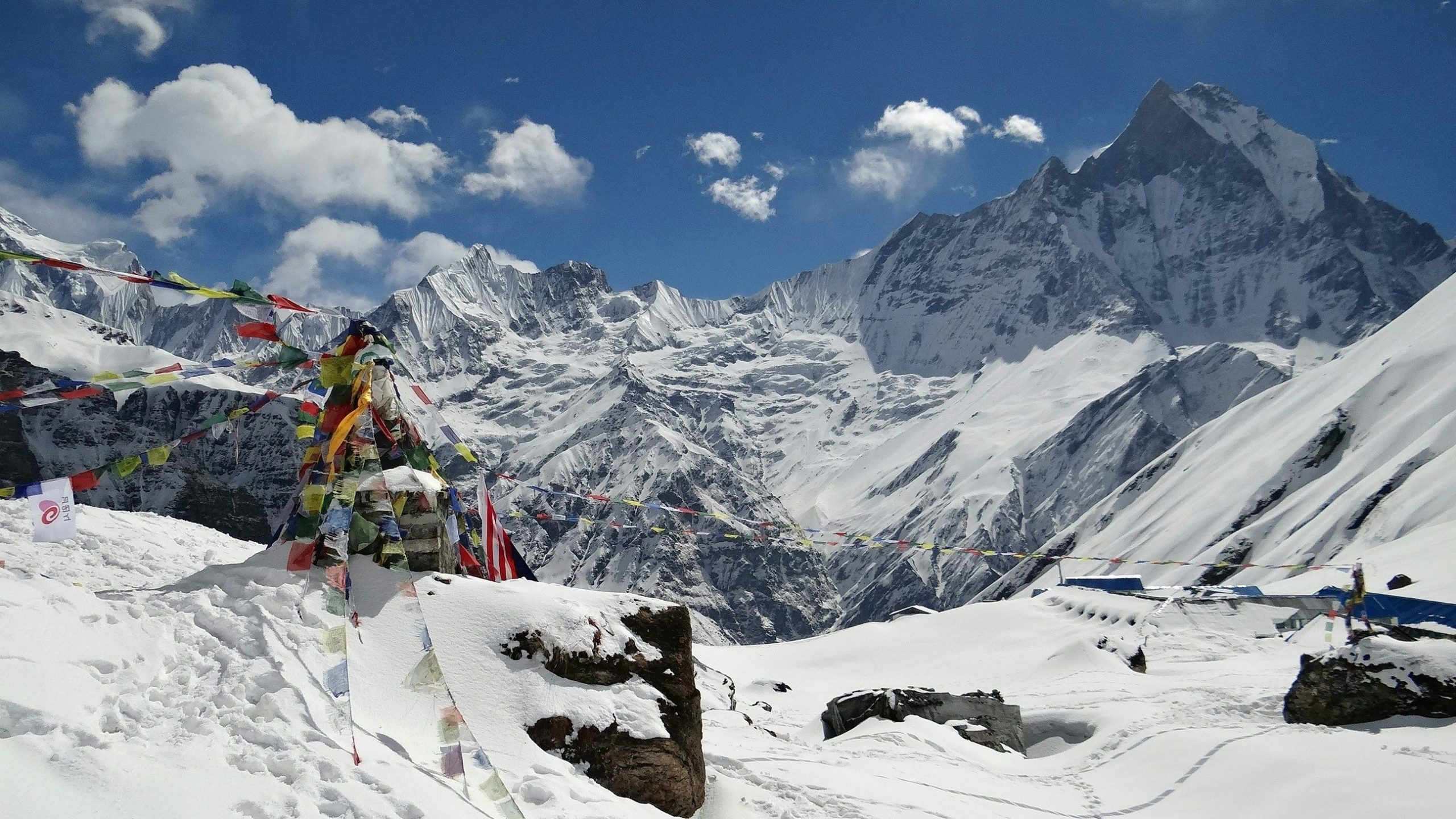
After days of winding through quaint villages and across suspension bridges, the ascent to Chhomrong feels like a significant milestone. Perched on a ridge, this lively village serves as a major gateway to the Annapurna Sanctuary. From its stone-paved paths, you’ll get some of the most iconic, postcard-perfect views of Machhapuchhre’s unmistakable “Fishtail” peak and the towering Annapurna South. It’s a place where trekkers gather, share stories, and prepare for the deeper dive into the heart of the Annapurna range, knowing the true giants now stand sentinel.


Dovan (2,600m) / Himalaya Hotel (2,920m)

Beyond Chhomrong, the trail plunges into a dense bamboo and rhododendron forest, following the Modi Khola river. The air here is often damp and cool, the sounds dominated by the rushing water and chirping birds. Stops like Dovan and Himalaya Hotel offer rustic lodges nestled deep within the valley, providing shelter amidst the thick jungle. It’s a transition zone, where the landscape shifts from cultivated terraces to wild, untamed nature, preparing you for the more alpine environment ahead. The oxygen levels slowly but surely begin to demand more effort.


Deurali (3,200m)

The forest gradually thins as you climb towards Deurali, a small cluster of lodges nestled beneath towering cliffs. The landscape takes on a more dramatic, rugged feel, often with waterfalls cascading down rocky faces. This is where the true sense of being deep within the mountains begins to settle in. Surrounded by vertical rock walls and the persistent roar of the Modi Khola, Deurali offers a stark reminder of the immense scale of the Annapurna massifs, which now completely dominate your view.


Machhapuchhre Base Camp (MBC) (3,700m)

After Deurali, a final push through an even more exposed, rocky terrain brings you to Machhapuchhre Base Camp. While not a true base camp for summiting the sacred Fishtail (it remains unclimbed), it serves as a crucial acclimatization stop and a breathtaking viewpoint. Here, you’re literally surrounded by a ring of colossal peaks – Hiunchuli, Annapurna South, Annapurna I, Gangapurna, and the majestic Machhapuchhre itself. The air is crisp, the silence profound, and the sheer scale of the mountains, looming so close, is utterly humbling. This is where the magic truly begins to reveal itself.


Annapurna Base Camp (ABC) (4,130m)
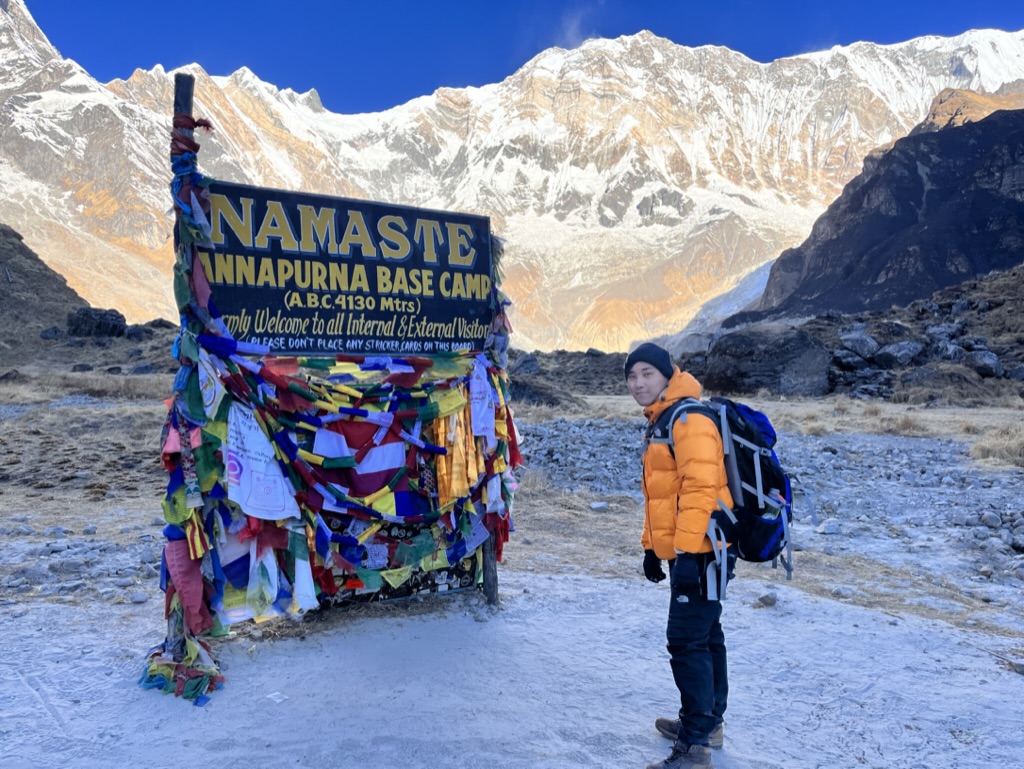
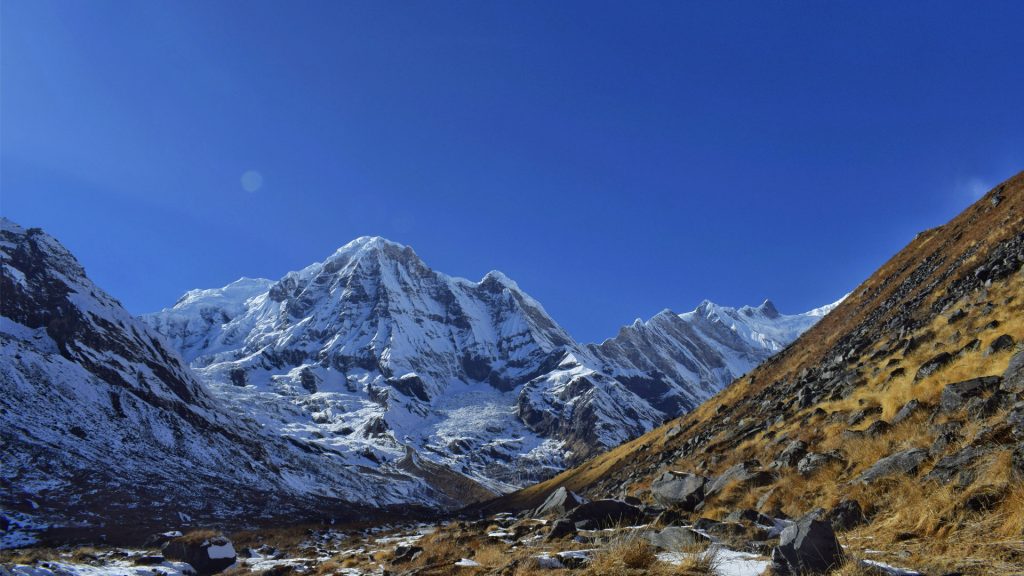
A short, glorious trek from MBC brings you into the ultimate reward: Annapurna Base Camp, nestled within the magnificent Annapurna Sanctuary. Here, if you’re lucky, you’ll get an unmatched view encircled by some of the world’s most formidable peaks:

  • Annapurna I (8,091m)
  • Annapurna South, Hiunchuli
  • Gandharva Chuli
  • Tent Peak
  • Gangapurna
  • The sacred Machhapuchhre form a breathtaking 360-degree panorama.
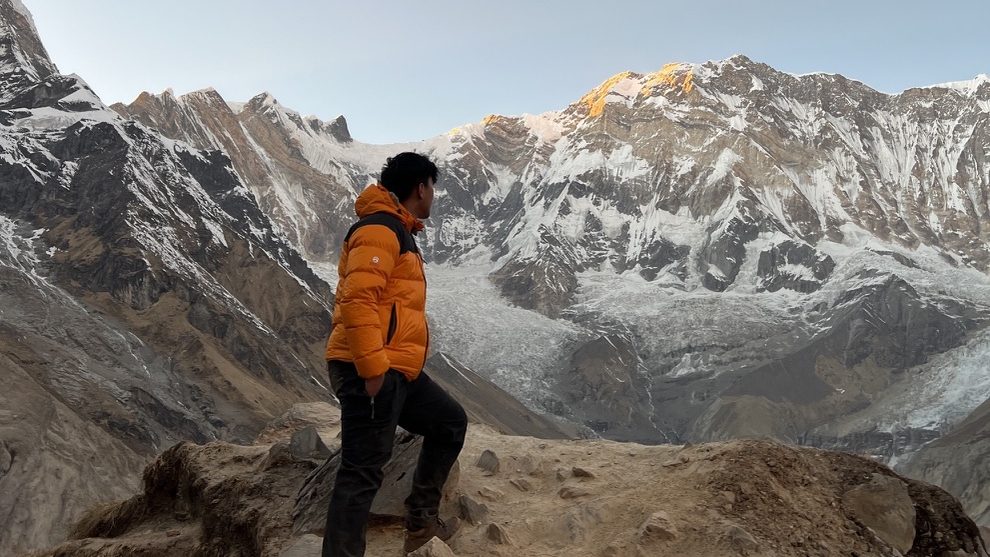
Here, you’re standing at the foot of an 8,000-meter peak, yet the feeling is one of serene enclosure, not stark exposure. Sunrise paints the snow-capped giants in hues of gold and orange, a spectacle that etches itself into your soul. The energy is one of profound peace and immense wonder. It’s a spiritual communion with the mountains where you feel tiny yet utterly connected to something ancient and grand.


The Trek Back

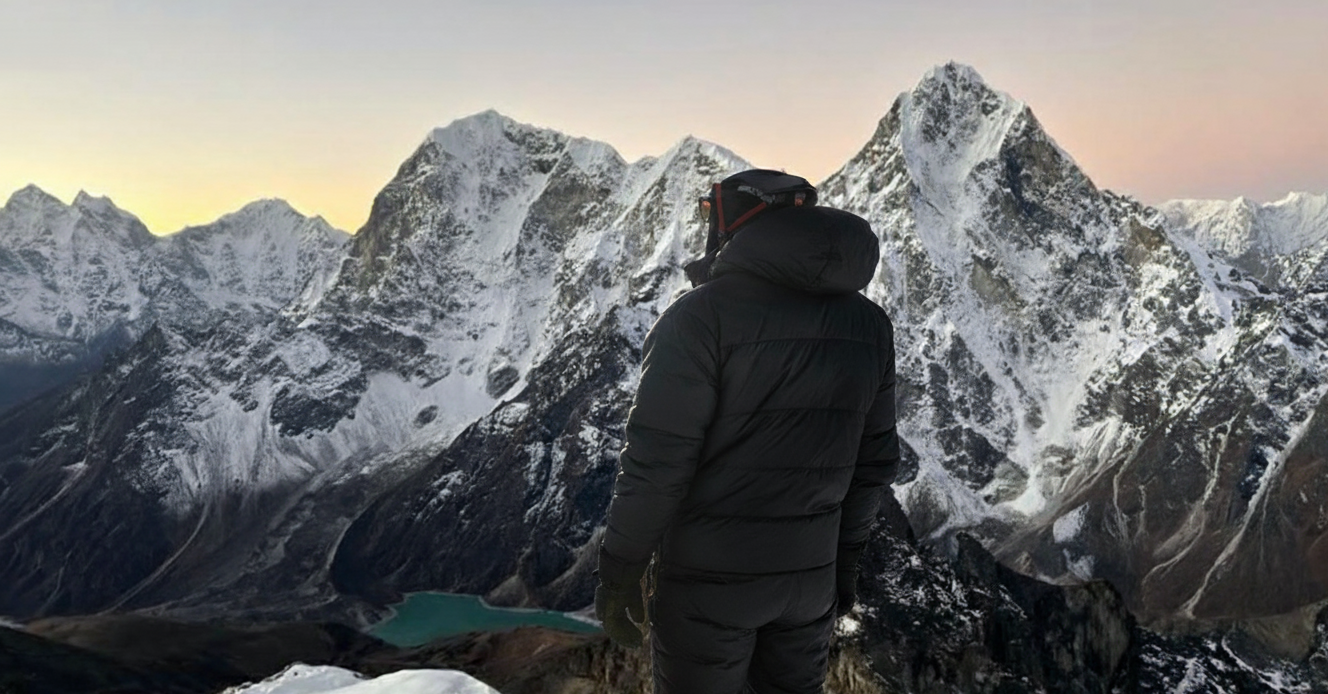
The view looking backwards from ABC of Machhapuchhre (fishtail) mountain

Having absorbed the majesty of the Annapurna Sanctuary, the journey back often feels more relaxed, a celebratory descent. The gradual loss of altitude brings back a hearty appetite and a spring to your step. You’ll retrace your path through familiar villages, seeing them with fresh eyes, and savoring the greenery and warmth that felt so normal just days before. Commend your fortitude and resilience, for you’ve not only trekked to a base camp but stepped into the very heart of the mountains.

Annapurna Base Camp is an intimate encounter with the Himalayas, a trek that weaves through cultural tapestry and verdant wilderness before culminating in an almost surreal mountain embrace. And that, in a nutshell, is why it’s more than just a destination. It’s a profound journey of discovery, both external and internal.

Documentaries about Sherpa people

When we think of Everest, a single image often dominates: a towering, snow-capped peak. But behind every successful ascent, every record broken, and every story of human endurance in the Himalayas, stands another equally iconic figure: the Sherpa. More than just high-altitude porters or guides, the Sherpa people are an ethnic group with a rich cultural heritage, deep spiritual beliefs, and an unparalleled connection to the mountains they call home.

Their resilience, strength, and unwavering spirit have captivated filmmakers for decades. While many documentaries focus on the Western climbers, a growing number of powerful films have begun to shift the lens, offering invaluable insights into the lives, traditions, and sacrifices of the Sherpa community itself.

If you’re looking to understand the true heroes of the Himalayas, here are some essential documentaries that go beyond the summit and into the heart of Sherpa culture:


1. Sherpa (2015)

Perhaps the most pivotal documentary to truly reframe the narrative, “Sherpa” was originally intended to document Everest climber Joby Ogwyn’s attempt to jump from the summit in 2014. However, fate intervened tragically when a massive avalanche swept through the Khumbu Icefall, killing 16 Sherpa high-altitude workers.

Director Jennifer Peedom pivoted the film entirely, turning it into a poignant exploration of the Sherpa perspective on risk, religion, and the economics of Everest climbing. It delves into the tensions between Western expeditions and the local workers, the Sherpas’ spiritual beliefs that guide their relationship with the sacred mountain, and the devastating impact of such tragedies on their tight-knit communities. “Sherpa” is a must-watch for anyone seeking a deeper, more ethical understanding of Everest.


2. The Man Who Skied Down Everest (1975)

This Academy Award-winning documentary follows Japanese alpinist Yuichiro Miura’s audacious 1970 expedition to ski down Mount Everest. While the focus is Miura’s incredible feat, the film also offers a fascinating, albeit earlier, glimpse into the vital role of Sherpas. It highlights their unwavering support, resilience, and the sheer logistical effort they contribute to such ambitious projects. It’s a historical piece that underscores their presence even in earlier narratives of Everest exploration.


3. Living on Everest (2010)

“Living on Everest” is a compelling series that moves beyond the summit bids to explore the daily lives and unique challenges faced by the Sherpa people throughout the entire Everest season. It follows various individuals – guides, cooks, base camp managers, and their families in the villages – offering an intimate look at their traditions, the economics driven by tourism and climbing, and how modern life intersects with their ancient culture. It’s an excellent way to see the broader tapestry of Sherpa life, not just their roles on the mountain.


4. National Geographic’s “Into the Death Zone” (2012) / “Storm Over Everest” (2008)

While these National Geographic productions often focus on specific climbing events or disasters, they frequently feature powerful interviews and perspectives from Sherpa climbers and their families. “Into the Death Zone” explores the physiology and psychology of surviving at extreme altitudes, often including insights from Sherpas who operate flawlessly there. “Storm Over Everest” (a look back at the 1996 disaster) meticulously includes the Sherpa accounts, underscoring their professionalism and vital contributions in life-or-death situations. These films, while broader in scope, offer critical Sherpa perspectives on the dangers and demands of their work.


5. Beyond the Summit: The Sherpa’s Story (Ongoing Short Films/Series)

Increasingly, shorter documentaries and online series produced by climbing brands and independent filmmakers are emerging, focusing directly on individual Sherpa climbers, their personal stories, and their aspirations beyond simply supporting Western expeditions. These contemporary pieces often highlight the evolving ambitions within the Sherpa community, their drive to lead expeditions, and their efforts to preserve their culture while embracing modern opportunities. Search platforms like YouTube and Vimeo for recent productions from reputable adventure film festivals.


6. PASANG: In the Shadow of Everest (2022)

This critically acclaimed documentary tells the gripping and inspiring story of Pasang Lhamu Sherpa, the first Nepali woman to summit Mount Everest. Her journey was far more than just a physical ascent but a battle against societal expectations, gender discrimination, and skepticism within her own country.

“PASANG” illuminates the immense pressure and challenges faced by Sherpa women, even those with extraordinary talent and courage. It’s a powerful testament to her pioneering spirit and the lasting legacy she left, not just for Sherpa women, but for women climbers everywhere. This film offers a crucial perspective on female empowerment within a deeply traditional and male-dominated high-altitude world.


7. Mountain Queen: The Summits of Lhakpa Sherpa (2023)

“Mountain Queen” introduces us to Lhakpa Sherpa, arguably the most accomplished female high-altitude mountaineer in history, with the most Everest summits by any woman. Yet, her story extends far beyond her climbing records. The documentary poignantly captures her life in Connecticut, working as a dishwasher and raising her daughters, all while quietly holding the title of Everest’s “Mountain Queen.”

The film explores the stark contrast between her two worlds, her drive to keep climbing, and the challenges of being a single mother balancing a demanding life with an extraordinary passion. It’s a deeply human story about resilience, sacrifice, and the often-unseen struggles of the very individuals who guide others to the world’s highest peaks.


8. Caravan (1999)

Moving beyond the Everest focus, “Caravan” (also known as “Himalaya”) is a visually stunning and deeply moving ethnographic drama that transports viewers to the remote, high-altitude Dolpo region of Nepal. This Oscar-nominated film beautifully captures the age-old traditions of the Dolpo-pa, a people closely related to the Sherpas through their Tibetan Buddhist culture and mountain way of life.

It tells the story of an aging chief, a rebellious young leader, and their arduous journey guiding a yak caravan across treacherous passes to trade rock salt for grain before winter. This documentary offers a rare, intimate, and authentic glimpse into a disappearing way of life, showcasing the profound interdependence between humans, animals, and the unforgiving Himalayan landscape. It’s a poetic tribute to resilience, survival, and the enduring spirit of mountain communities.

Why These Stories Matter

These documentaries collectively paint a more complete and nuanced picture of the Sherpa people. They remind us that behind every “Everest conqueror” are individuals of extraordinary skill, courage, and spiritual depth, whose contributions are foundational to the very possibility of high-altitude mountaineering.

At Sherpa Society, we honor this heritage deeply. Our journeys in the Himalayas are not just about reaching destinations, but about connecting with the land and its people. We encourage you to watch these films not only for their gripping narratives but for the profound respect they inspire for the true custodians of the world’s highest mountains.

Getting to Everest Base Camp

Listed on countless bucket lists, it’s our turn to write about the world’s most famous trek. You’re guaranteed to lose a few pounds but gain so much more in memories and experience.


Lukla (2,845m)

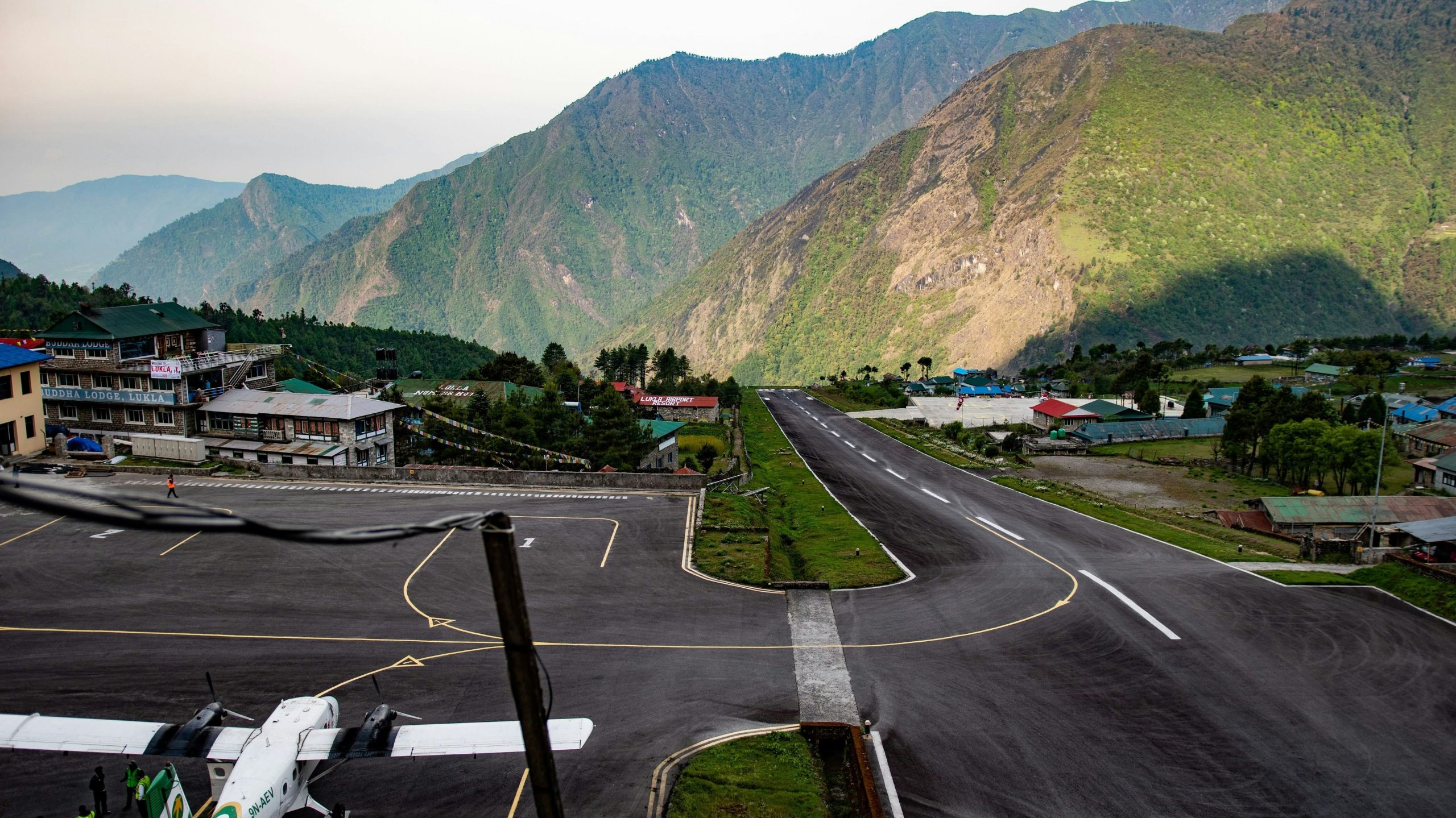
Your journey begins on a runway that feels too short, nestled between mountains, where you’re suddenly breathing different air that’s thinner and sharper. The initial days are a green blur of rhododendron forests, suspension bridges swinging over roaring rivers, and the constant chime of yak bells as you ascend among the Sherpa people.

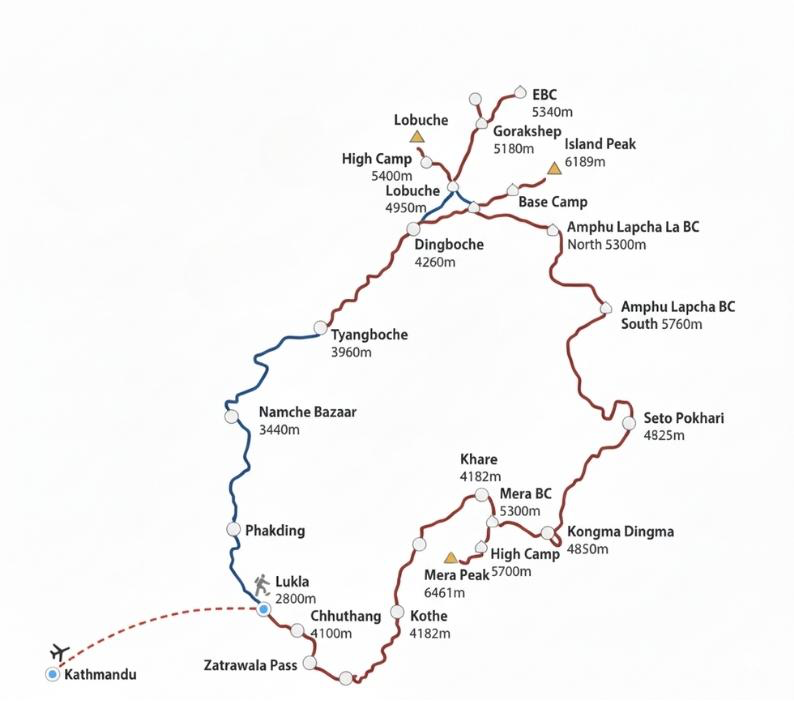
It’s worth noting that not all treks head the same way. For example the popular Mera Peak summit follows a divergent path from this airport.


Namche Bazaar (3,440m)

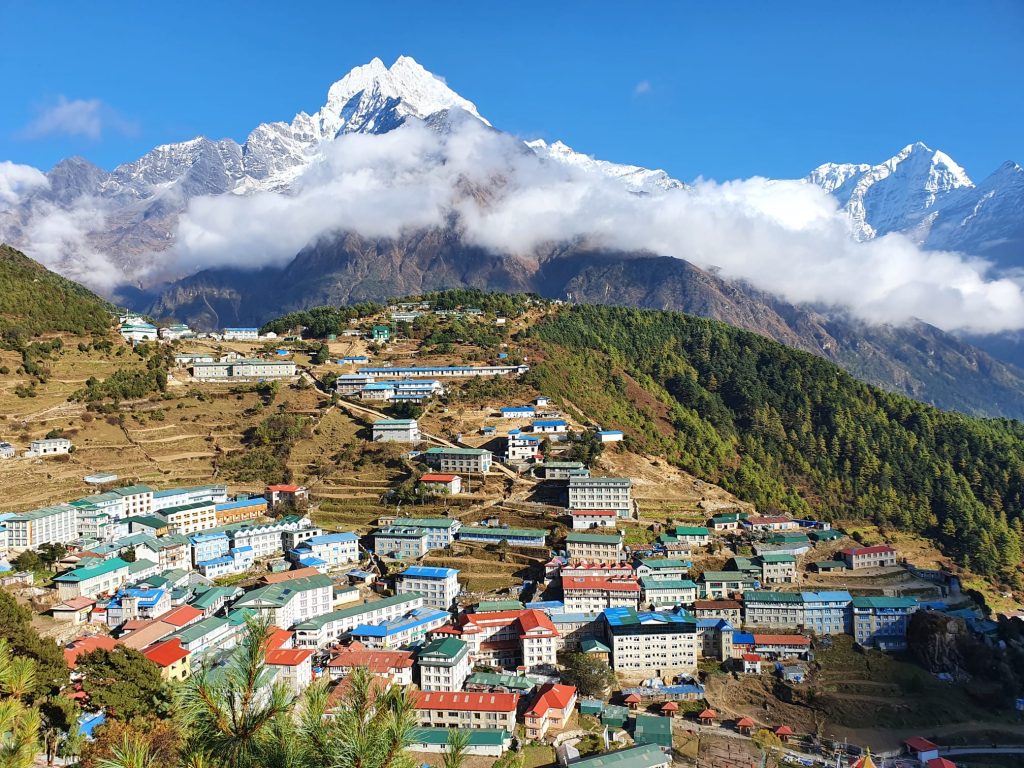
Acclimatization for most would begin around Namche Bazaar, often called the “Gateway to Everest”, where you’ll find a bustling town that glows at night.

Headaches become common companions. Sleep can be elusive. This vibrant hub, carved into a crescent-shaped mountain face, offers a first proper glimpse into Sherpa culture and the scale of the Himalayas. That appetite you had back home? It might just vanish, replaced by a constant mild nausea.

If any last minute shopping/renting need be done, this would be the spot.


Tengboche (3,867m)

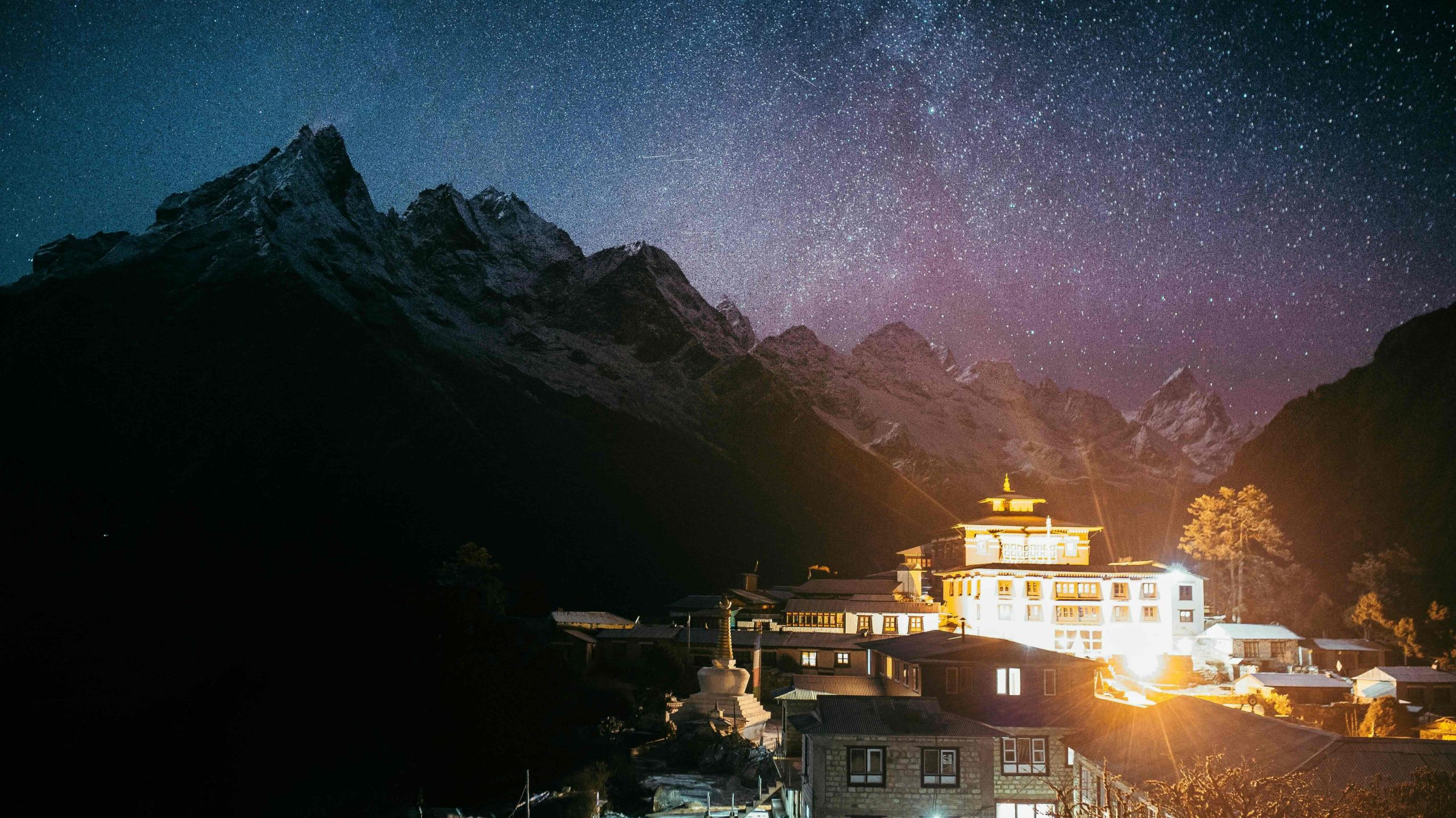
Beyond Namche, the trail continues its relentless climb through fragrant juniper and rhododendron forests. Tengboche emerges as a serene and incredibly scenic stop, dominated by its famous monastery. This is the spiritual centre of Khumbu, where trekkers and climbers often receive blessings for safe passage. The views from here are nothing short of spectacular, with Ama Dablam, Everest, and Lhotse filling the horizon.


Deboche (3,820m)

Just a short distance below Tengboche, Deboche offers a quieter, more intimate setting. Often a stop for lunch or a peaceful overnight stay, it’s surrounded by lush forests and offers a gentle descent from Tengboche, providing a brief moment of reprieve before the serious ascents continue. It’s a reminder that even in the vastness of the Himalayas, small, charming settlements offer warmth and shelter.


Pangboche (3,985m)

Pangboche is one of the oldest and most traditional Sherpa villages in the region. Its ancient monastery is a treasure trove of history, rumored to house a Yeti scalp. This village provides a deeper connection to the local heritage and a stunning vantage point overlooking the Imja Khola river. The air is thinning, and the mountains grow ever closer, signaling your deep immersion into the high Himalaya.


Dingboche (4,410m)

Nestled in the beautiful Imja Valley, Dingboche marks a significant milestone in your ascent. The landscape here transitions dramatically to sparse, alpine tundra, dominated by stone walls and grazing yaks. Another crucial acclimatization stop, you’ll typically spend an extra day here to help your body adapt. The surrounding peaks, including Ama Dablam, Island Peak, and Lobuche East, create a majestic amphitheater, reminding you of the formidable challenges that lie ahead.

Climbers wishing to scale the famous Island Peak diverge here.


Lobuche (4,940m)

The trek to Lobuche is often tough, gaining significant altitude through an exposed, rocky landscape. Located at the foot of the Khumbu Glacier, this small settlement serves as the last major stop before Everest Base Camp. The air is noticeably thin, and the cold bites harder here. It’s a place of hushed anticipation, where trekkers prepare for the final push, surrounded by immense peaks and a palpable sense of the mountaineering history that permeates the air. This is also the starting point for those tackling Lobuche East, a fantastic beginner mountain for Everest and technical climbing.


Gorak Shep (5,164m)

The last inhabited spot with lodges before Everest Base Camp. It’s stark, often windswept and strategically vital. Most trekkers spend the night here, using it as a base for both their journey to EBC and an early morning ascent to Kala Patthar. The landscape here is truly lunar, dominated by rocks, ice, and the sheer scale of the surrounding giants.


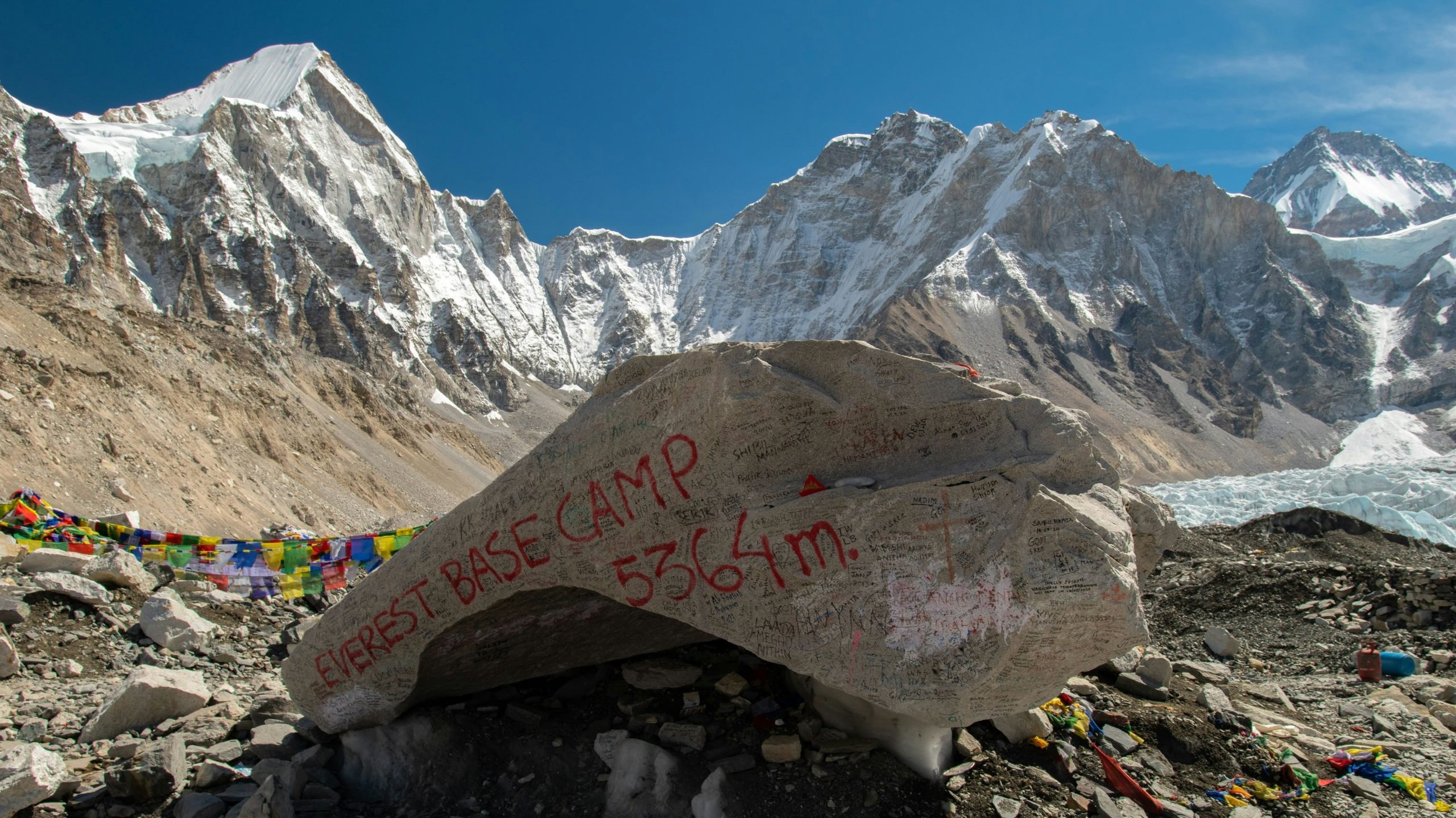
Everest Base Camp (5,364m)

A job well done! EBC is now a temporary city of tents pitched on a glacier that has lasted over 70 years since. You’ll walk amidst tents of expeditions preparing for the summit, an incredible atmosphere of ambition and camaraderie. While Everest’s summit is partially obscured, the energy, the history, and the sheer awe of being at the foot of the world’s highest mountain are undeniable.


Khumbu Icefall (5,486m) – Gateway to the Summit.

Starting right at the end of EBC on the side closest to Everest itself, the Khumbu Icefall is a chaotic, frozen river of ice, constantly shifting, groaning, and calving. It is a dynamic, massive, and highly dangerous section of the Khumbu Glacier that flows down from the Western Cwm.

Mount Everest itself is partially hidden by Nuptse, a guardian peak. But the scale, the sheer audaciousness of what lies beyond the Icefall – that’s what hits you. This is where dreams are launched, where immense courage is gathered.


Kala Patthar (5,643m) – Front row seat to Everest

For the classic, unobstructed Everest panorama, the final push is to Kala Patthar. ‘Black Stone.’ A short, steep hike from Gorak Shep, usually at dawn. The air bites. Your legs are heavy. But as the sun kisses the summit of Everest, turning it to gold, you understand. The view here, higher at 5,643m, truly is better than EBC itself. It’s your front-row seat to the top of the world.


The Trek Back

Once you’ve gasped your sigh of relief having reached the end destination and witnessing the almighty, the descent is physically and mentally the easiest part. Commend your fortitude and resilience on the way down.

Everest Base Camp is an internal expedition, a deep dive into discomfort and awe, and ultimately, a profound encounter with your own capabilities. And that, in a nutshell, is why it’s more than just a destination. It’s a transformation.

Conquer The Three Peaks

For aspiring mountaineers dreaming of towering Himalayan summits, the journey best begins with a deliberate progression. Here at Sherpa Society, we specialize in building long term relationships with our clients over the years and even decades, guiding you safely and successfully through the Himalayas.

The Three Peaks are a great introduction to serious climbing for those ready to move beyond trekking and embrace the thrill of glacier travel, fixed ropes, and significant altitude. These Three Peaks in the Everest’s Khumbu region include:

  • Mera Peak (6,476m)
  • Island Peak (6,189m)
  • Lobuche East (6,119m)

These three mountains offer a progressive test of skill, endurance, and acclimatization, making them the perfect stepping stones for future 7,000m or even 8,000m ambitions.


1. Mera Peak (6,476m)

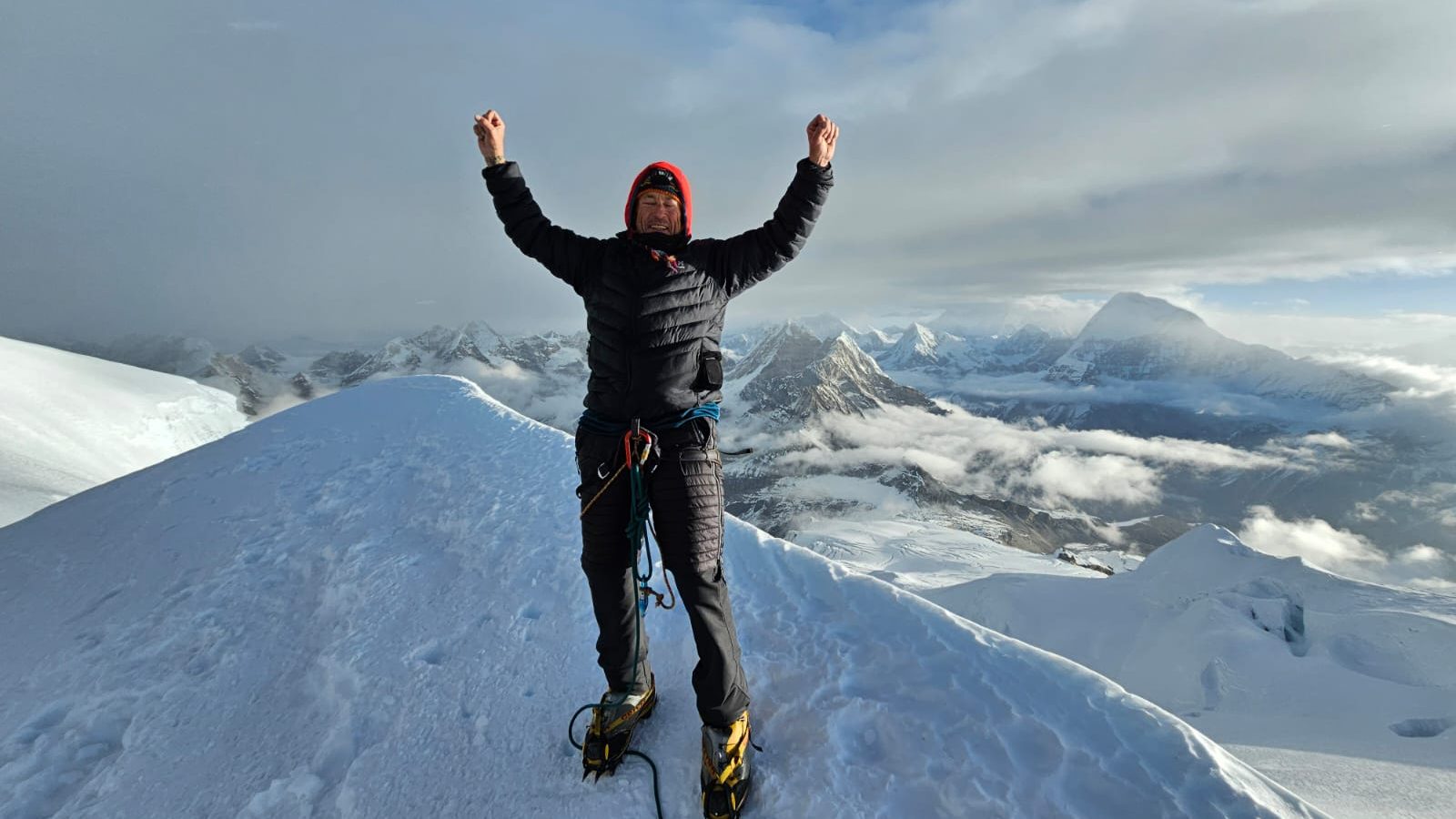
Jurgen Sollner, at age 64 in November 2024, an ex-marathon runner at the summit of Mera.

Often touted as the highest trekking peak in Nepal, Mera is renowned for its straightforward ascent and, more importantly, its utterly breathtaking panoramic summit views. From its lofty summit, you get an unparalleled 360-degree spectacle of five of the world’s six highest mountains: Mount Everest, Lhotse, Makalu, Cho Oyu, and Kangchenjunga. It’s a view that truly leaves you speechless.

While high in altitude, Mera Peak is technically less demanding than Island Peak or Lobuche East. Its long, gradual snow slopes are ideal for learning crampon technique, rope management, and testing your acclimatization to extreme heights in a relatively safe environment.


2. Island Peak (6,189m)

Officially known as Imja Tse, Island Peak is perhaps the most famous and visually striking of the three. Located in the Chhukung valley, its distinctive summit pyramid offers the biggest technical challenge. The climb involves navigating a glaciated terrain, crossing crevasses, and ascending a steep headwall with the assistance of fixed ropes and a Jumar (ascender).

Island Peak builds on the glacier skills learned on Mera, introducing you to steeper climbing, rappelling, and more significant exposure. It’s a crucial step in developing the technical proficiency and mental fortitude required for higher peaks.


3. Lobuche East (6,090m)

Often combined with the Everest Base Camp trek, Lobuche’s East Peak provides an incredible climbing challenge right in the heart of the Khumbu region, offering spectacular views of Everest, Lhotse, Nuptse, and Ama Dablam. It is often considered the most technically demanding of the three, featuring rock scrambling, steep snow and ice climbing, and navigating exposed sections along its stunning ridge.

Successfully climbing Lobuche East demonstrates a strong command of technical skills under high-altitude conditions. It’s an ideal test of your ability to perform complex maneuvers, manage risk, and maintain focus on challenging terrain, preparing you for the even greater demands of a 7,000m or 8,000m objective.


Why Sherpa Society?

Our family-run company, with over 50 years of Sherpa heritage, has guided countless climbers to these majestic summits. We understand the nuances of acclimatization, the critical importance of safety protocols, and the need for seamless logistics.

By choosing our custom multi-peak packages, you benefit from:

  • Expert Guidance: Our experienced Sherpa guides lead every step, ensuring your safety and success.
  • Hassle-Free Logistics: We handle all permits, documentation, equipment transport, and camp management.
  • Optimal Acclimatization: Our itineraries are carefully designed for safe and effective acclimatization.
  • Cost & Time Savings: Bundling peaks offers significant savings compared to separate expeditions.

If you’re looking to complete the [Island Peak, Lobuche East & Mera Peak Challenge] as a single, unforgettable expedition, or tackle them individually, our team is ready to craft your perfect Himalayan adventure.


Ready to elevate your climbing journey?

  • Explore our specific expeditions for [Mera Peak].
  • Discover the thrill of [Island Peak].
  • Take on the challenge of [Lobuche East Peak].
  • Or, [Contact us today] to discuss your custom [Three Peaks Combination Package]!

Souvenirs from Nepal

Nepal is a treasure trove of culture, spirituality, and craftsmanship, offering unique souvenirs far beyond the typical tourist trinkets. Whether you’ve spent weeks trekking the Himalayas or just a few days exploring Kathmandu, here are the top five authentic items to bring home as a lasting reminder of your journey.


1. Singing Bowls (Thadobati or Manipuri Style)

A Singing Bowl is perhaps the most iconic souvenir for capturing the meditative essence of the Himalayas. These hand-hammered metal bowls produce deep, resonant, and tranquil sounds when played or rimmed with a wooden mallet.

  • Why buy it: They are used in meditation, relaxation, and sound healing practices. The quality varies significantly, so look for heavy, hand-hammered bowls that hold a strong vibration.
  • Best place to buy: Patan Durbar Square area, or specialized stores in Thamel, Kathmandu. Be sure to test the sound and vibration yourself before purchasing!

2. Pashmina (Cashmere)

Nepal is renowned for producing some of the finest Pashmina (or cashmere) in the world, sourced from the undercoat of the Himalayan mountain goat (Chyangra). These scarves, shawls, and blankets are incredibly soft, lightweight, and warm.

  • Why buy it: It’s a luxurious and practical souvenir. Genuine Nepali pashmina often offers superior quality compared to mass-produced items elsewhere.
  • Pro Tip: Be wary of suspiciously cheap pashmina, as it is often a blend of wool and synthetic fibers. For true quality, look for 100% pure cashmere labels, although even high-quality blends (like silk-cashmere) are a wonderful purchase.

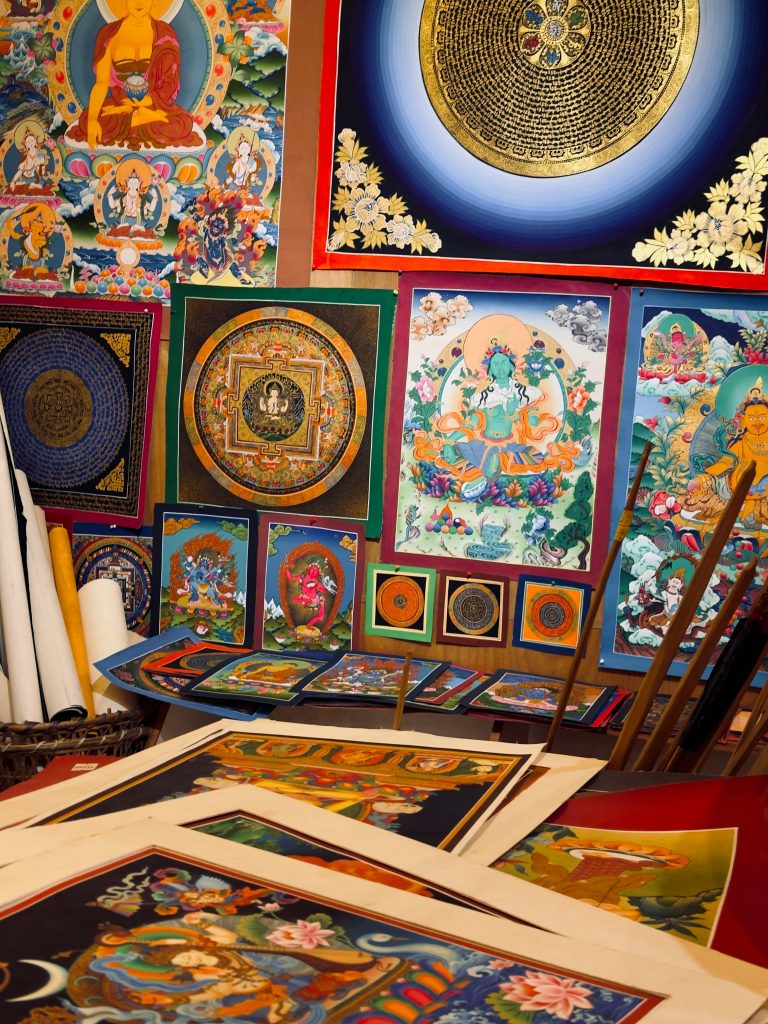
3. Thangka Paintings

A Thangka is a traditional Tibetan Buddhist scroll painting, typically depicting a Buddhist deity, mandala, or specific moment from the life of the Buddha. These vibrant, intricate paintings are tools for meditation and devotion.

  • Why buy it: A thangka is a stunning piece of devotional art that takes skilled artists months to complete. It represents the profound spiritual heritage of the region.
  • Best place to buy: Bhaktapur and the Boudha Stupa area are home to many specialized thangka schools and workshops where you can observe the artists at work.

4. Khukuri Knife

The Khukuri (or Kukri) is the distinctively curved, forward-leaning knife of the Gurkhas, a national symbol of Nepal and a mark of bravery and valor. While historically a utility knife and a weapon, modern khukuris are sold as powerful, hand-forged collector’s items and souvenirs.

  • Why buy it: It’s an authentic symbol of Nepali culture and history. Khukuris range from large, practical blades to smaller, decorative versions.
  • Important Note: If you plan to travel internationally with a khukuri, remember to pack it securely in your checked luggage and check your home country’s customs regulations regarding knives and blades.

5. Nepali Tea

While Darjeeling and Assam are famous, Nepal’s small-scale tea production in the high-altitude hills of Ilam and Dhankuta produces some exceptional, delicate brews. Nepali tea often has a unique flavor profile comparable to Darjeeling, yet with its own distinct character.

  • Why buy it: It’s a consumable souvenir that lets you share the taste and aroma of the Himalayas with friends and family back home. Look for the “Nepali Tea” or “Himalayan Tea” designation.
  • Varieties to try: Look for high-altitude orthodox black tea or delicate silver tips white tea.
  • Best place to buy: Dedicated tea shops in Kathmandu or directly from the source in the eastern Terai region.

6. Handwoven Tibetan Carpets

For those looking to bring home a truly substantial and artistic piece of Himalayan culture, a handwoven Tibetan carpet is an unparalleled choice. These magnificent rugs are not merely floor coverings; they are intricate works of art, each telling a story through its traditional motifs, vibrant colors, and unparalleled craftsmanship.

  • Why buy it: Tibetan carpets are renowned for their exceptional durability, unique knotting technique, and use of high-quality Himalayan wool. Each piece is one-of-a-kind, carrying centuries of design heritage brought to Nepal by Tibetan political refugees. Unlike mass-produced carpets, a genuine handwoven Tibetan carpet is an investment piece that gains character and value over time, becoming a focal point in any home. They are incredibly soft underfoot, naturally insulating, and can last for generations with proper care.
  • What to look for: Seek out carpets made from Tibetan Highland Wool, known for its strength and lustrous quality. Traditional designs often feature dragons, snow lions, lotus flowers, or geometric patterns, all imbued with symbolic meaning.
  • Best place to buy: Dedicated carpet workshops in Kathmandu and Patan are the best places, where you can often see the weavers at work. They will also be able to assist with international shipping.
  • Consideration: This is a higher-end souvenir, so be prepared to invest. However, the unique artistry and lasting quality make it a truly special acquisition.

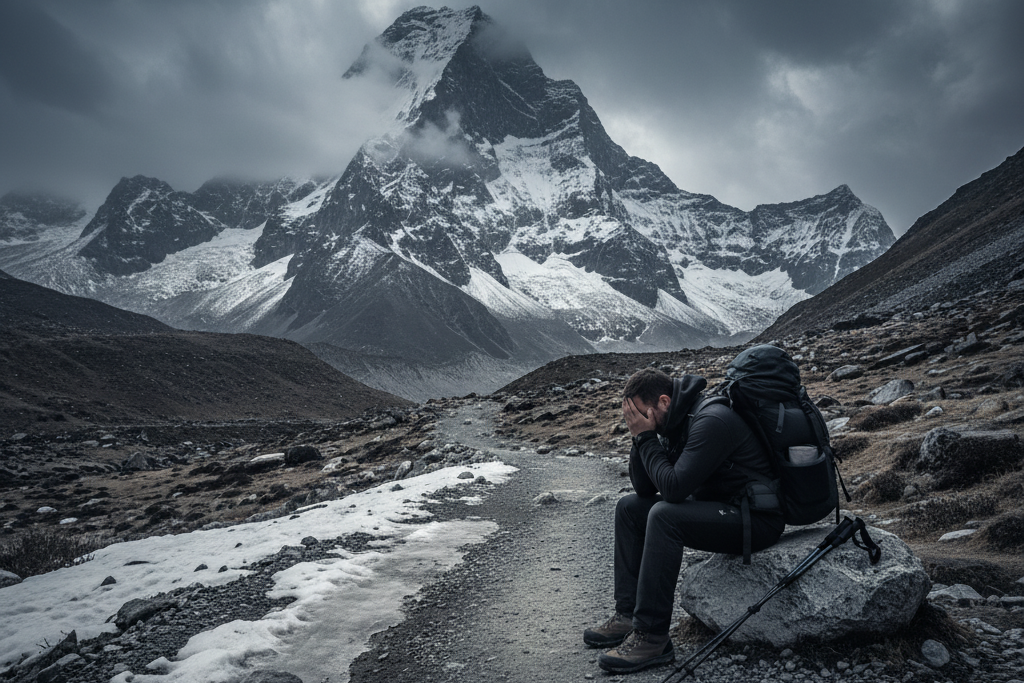
Failed Summit? Find Victory in the Journey

For many trekkers, the goal of reaching a summit represents the pinnacle of their adventure, from the motivation before the journey to the thrill of the reaching the top to the pride you feel after.

But what happens when it doesn’t work out quite as planned? You may feel like you’ve fallen short. This article is here to tell you your journey is still filled with victories worth celebrating, and why your trek is so much more than just the final peak.

1. Part of the Journey

First thing to note is that we all experience it. Every climber who has successfully climbed a peak, has failed beforehand. And so this is not a be all end all moment.

2. The Experience is more than the Summit

Reaching the top of a mountain is only a small part of what makes trekking meaningful. It’s the journey that truly shapes the adventure – the days spent navigating mountain trails, waking up to the sound of nature, and witnessing breathtaking landscapes that are impossible to see anywhere else.

Every step you’ve taken is a victory in itself. Whether it’s crossing icy rivers, climbing through steep passes, or meeting new people along the way, those experiences can only be found in the Himalayas. The bonds you form with fellow trekkers, the unique cultural exchanges with local guides, and the natural beauty that surrounds you—all of these moments are treasures that no summit can take away.

3. Physical and Mental Resilience

One of the most rewarding aspects of trekking is discovering your inner strength. Even if you didn’t reach the summit, think of what you accomplished. You pushed yourself physically and mentally through high altitudes, unpredictable weather, and rough terrain. Surpassing significant milestones, like breaking the 5,000m barrier, showcases your resilience and determination. These achievements allow you to understand your limits more precisely, making you more equipped for future challenges.

The mountains teach us humility. The weather can change in an instant, health issues might arise, or the altitude may become overwhelming. Making the decision to turn back is one of the hardest choices for a climber, but it’s also one of the most intelligent. It means you’ve listened to your body and the mountain—a sign of wisdom and strength.

4. Growth, Not Perfection

Many of the greatest mountaineers and adventurers have stories of not making it to the summit. The mountain will always be there, and there’s no shame in returning without conquering it. In fact, it sets the stage for growth—giving you a renewed perspective and the hunger to try again.

Adventure is not about perfection; it’s about progression. With every trek you undertake, you gain more skills, experience, and knowledge. The next time you attempt a climb, you’ll know what to expect, how to better prepare, and how to respect your limits.

5. The Beauty of Returning Another Day

There’s always a chance to come back. Mountains aren’t going anywhere, and a return summit always makes a great comeback story. Returning to a trek you’ve already experienced can be incredibly rewarding. With your newfound knowledge and mental toughness, the next attempt may lead to a different outcome. And if it doesn’t? You still win by giving it your all.

6. Your Trek is Unique

Remember, every trekker’s experience is unique. Maybe you didn’t reach the peak, but your journey isn’t comparable to anyone else’s. You have your own stories of perseverance, hardship, and personal triumph. It’s about recognizing the value in your own adventure, without letting the summit define its worth.

Celebrate Your Achievements

Nature in the shape of the mountains will always humble us. Not making it to the top doesn’t diminish your journey or your accomplishment. Instead, it adds depth to your story, teaches you patience, and leaves room for future adventure.

It’s easy to focus on what didn’t happen. But celebrate every personal best, every tough decision and incredible view that will stay with you for a lifetime. From a grander scheme of things, you may just be one day grateful on what you learned form this trip alone. You’ve already succeeded in ways that many dream of; surpassing altitude barriers and pushing your limits. The summit is only a part of the whole picture and the Himalayas will always be there, waiting for your return, stronger and more determined.

Shinta Mani Mustang: Nepal’s Hidden Panoramic Gem

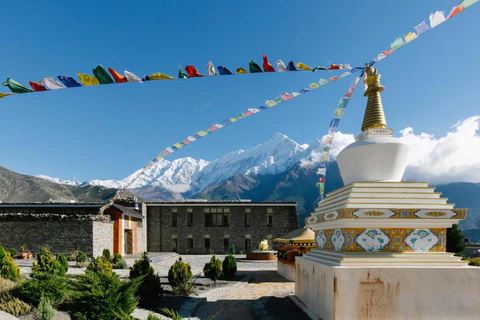
Mustang was once off-limits to foreign visitors until 1992. Today, it’s home to this lavish escape that blends comfort, culture, and the majesty of the Himalayas. In this remote and rugged scenery region of Nepal lies Shinta Mani, redefining the notion of luxury travel upon the Himalayas. Opening its gates in 2023, the 29-suite hotel is designed by the exuberant American hotel designer Bill Bensley who shares co-ownership with the Nepalese family-owned Sherpa Hospitality Group, the latter also managing the exquisite getaway. Amenities include a full-service spa with hot tubs and a sauna, a fine-dining restaurant, a bar, and a program of all-inclusive guided cultural and adventure activities like trekking, archery, and horseback riding.

“This is perhaps one of the most exciting projects we have ever had. I have never seen such wildly dramatic landscapes as the mountains and valleys of Mustang, and am thrilled that Shinta Mani can be the first to introduce this Forbidden Kingdom to international adventurers. This will be their base camp for explorations all around these phenomenal mountains, as always guided by our kind and infinitely knowledgeable BENSLEY Butlers, for the experience of a lifetime.” – Bill Bensley

Getting there

Fly to Kathmandu with Singapore Airlines via Singapore. From there, take a domestic flight to Pokhara, followed by a quick transfer to Pokhara’s second airport for a 20-minute flight to Jomsom. The hotel can assist with arranging these domestic transfers, or you can opt for a direct helicopter ride (additional charges apply).

A True Himalayan Escape

Shinta Mani is located in Jomsom, a village that once attracted only the most adventurous of backpackers and pilgrims. However, the region is now being recognized as a prime destination for luxury travelers. The resort, part of the renowned Bensley Collection, offers unparalleled access to what’s commonly described as this forbidden kingdom. It’s perched high at an elevation of 2800m, offering panoramic views of the stunning Annapurna and Nilgiri mountain ranges.

The property is truly secluded, surrounded by the serene beauty of Mustang’s high-altitude desert landscapes. The feeling of isolation here isn’t about being cut off from the world; it’s about escaping into the sublime tranquility of nature.

Cultural Immersion

To explore Mustang’s rich heritage, the resort organizes guided treks to one of the last Bon Buddhist villages in Nepal, Lubra, where guests can experience the ancient religion and meet locals who practice it. You’ll dine on traditional meals, prepared by local families, against the stunning backdrop of the Himalayas.

For those seeking spiritual enlightenment, a visit to Muktinath (one of the most sacred Hindu temples in Nepal) offers a deep dive into the country’s spiritual heart. After a trek through the landscape, guests are rewarded with stunning 360-degree views at Cheema Lake, where Shinta Mani Mustang staff surprise you with a glamping-style picnic, complete with cheese platters and hot bowls of Tibetan thukpa.

Surrounded by Nature

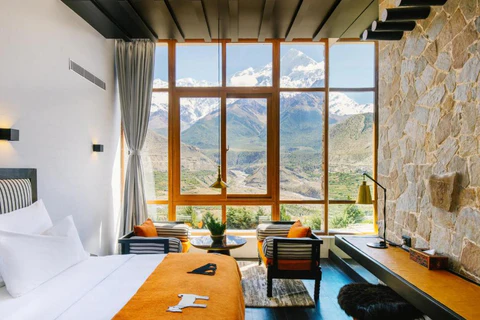
Despite the rugged environment, Shinta Mani spares no luxury. The 29 suites feature floor-to-ceiling windows for uninterrupted views of the majestic landscape, while inside, the rooms are adorned with Tibetan motifs, yak furs, cashmere blankets, and handcrafted furniture.

The wellness experience here is unparalleled. After a day of trekking, relax with a rejuvenating spa treatment or a soak in your private pool with a view of the Nilgiri peak. Daily massages and sessions with a traditional “amchi”—a healer practicing Sowa Rigpa, an ancient form of Tibetan medicine—add to the holistic experience.

Supporting Local Communities

Shinta Mani also prides itself on supporting the local economy. The resort sources local products, like the apple jams and juices from the nearby village of Marpha, known as the apple capital of Nepal. You can even visit the local bakery and enjoy traditional Thakali meals while hearing stories from the entrepreneurial women who run the businesses in these remote areas.

Conclusion

What sets Shinta Mani apart from other luxury resorts is how it seamlessly blends opulence with authentic cultural experiences. It’s a place where you can enjoy the comforts of a five-star retreat while connecting deeply with the ancient traditions and awe-inspiring landscapes of Mustang.

If you’re looking for a one-of-a-kind luxury escape that combines adventure, culture, and unparalleled beauty, Shinta Mani Mustang should be at the top of your travel list. Visit the website here.

About Us:

As a seasoned trekking and travel company, we have guided thousands of travelers through the most revered treks and sightseeing tours across Nepal, Tibet, India and Bhutan. Our legacy is dedicated to providing insightful and enriching experiences that connect you with the adventurous, cultural and spiritual essence of the Himalayas.