Tag: peak climbing

Conquer The Three Peaks
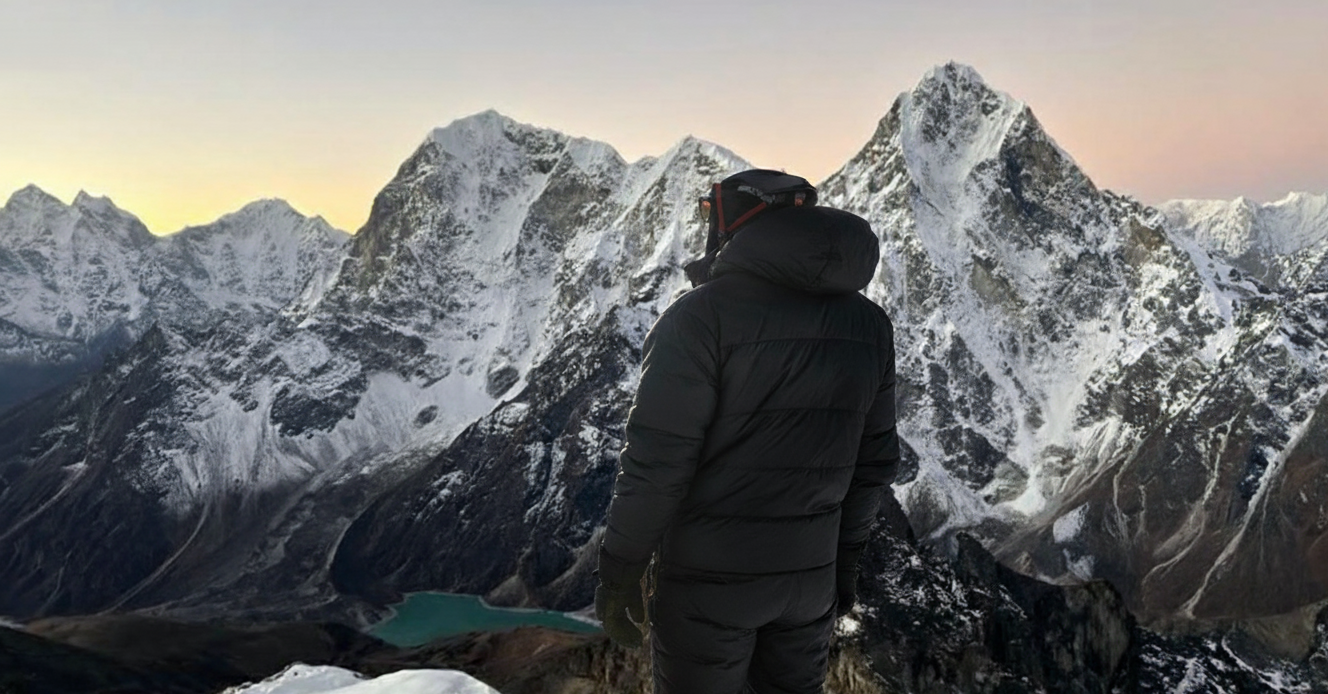
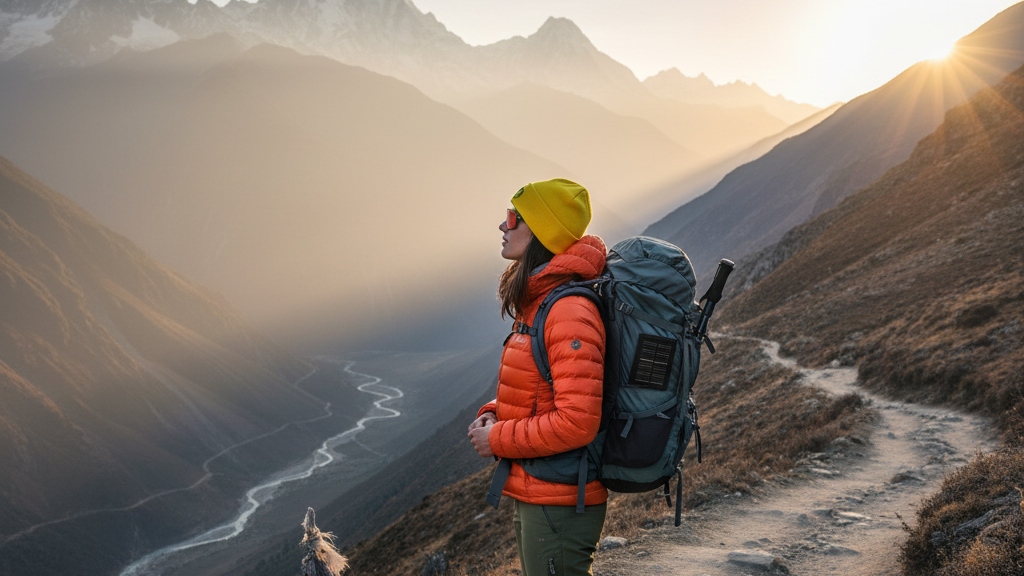
For aspiring mountaineers dreaming of towering Himalayan summits, the journey best begins with a deliberate progression. Here at Sherpa Society, we specialize in building long term relationships with our clients over the years and even decades, guiding you safely and successfully through the Himalayas.

The Three Peaks are a great introduction to serious climbing for those ready to move beyond trekking and embrace the thrill of glacier travel, fixed ropes, and significant altitude. These Three Peaks in the Everest’s Khumbu region include:

  • Mera Peak (6,476m)
  • Island Peak (6,189m)
  • Lobuche East (6,119m)

These three mountains offer a progressive test of skill, endurance, and acclimatization, making them the perfect stepping stones for future 7,000m or even 8,000m ambitions.
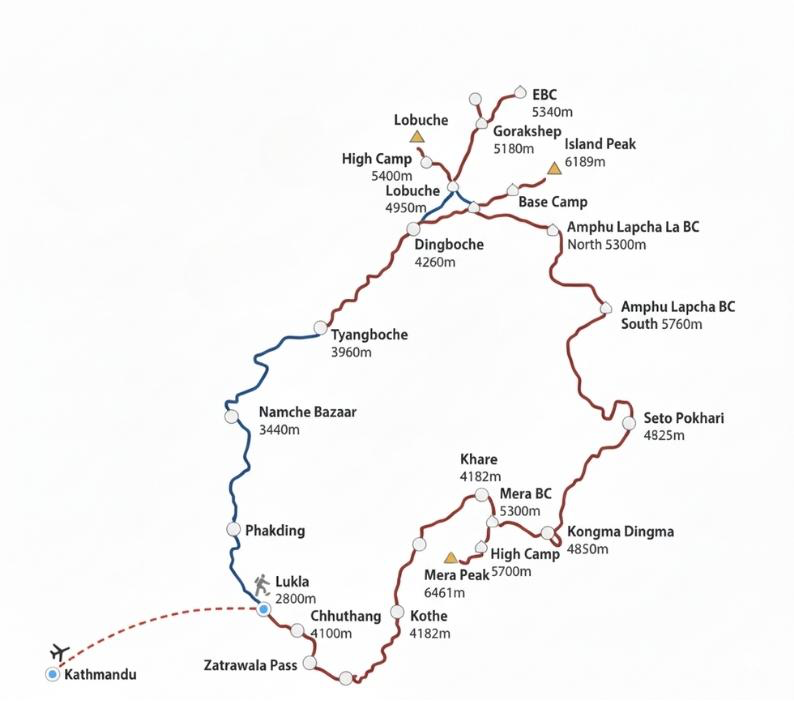

1. Mera Peak (6,476m)
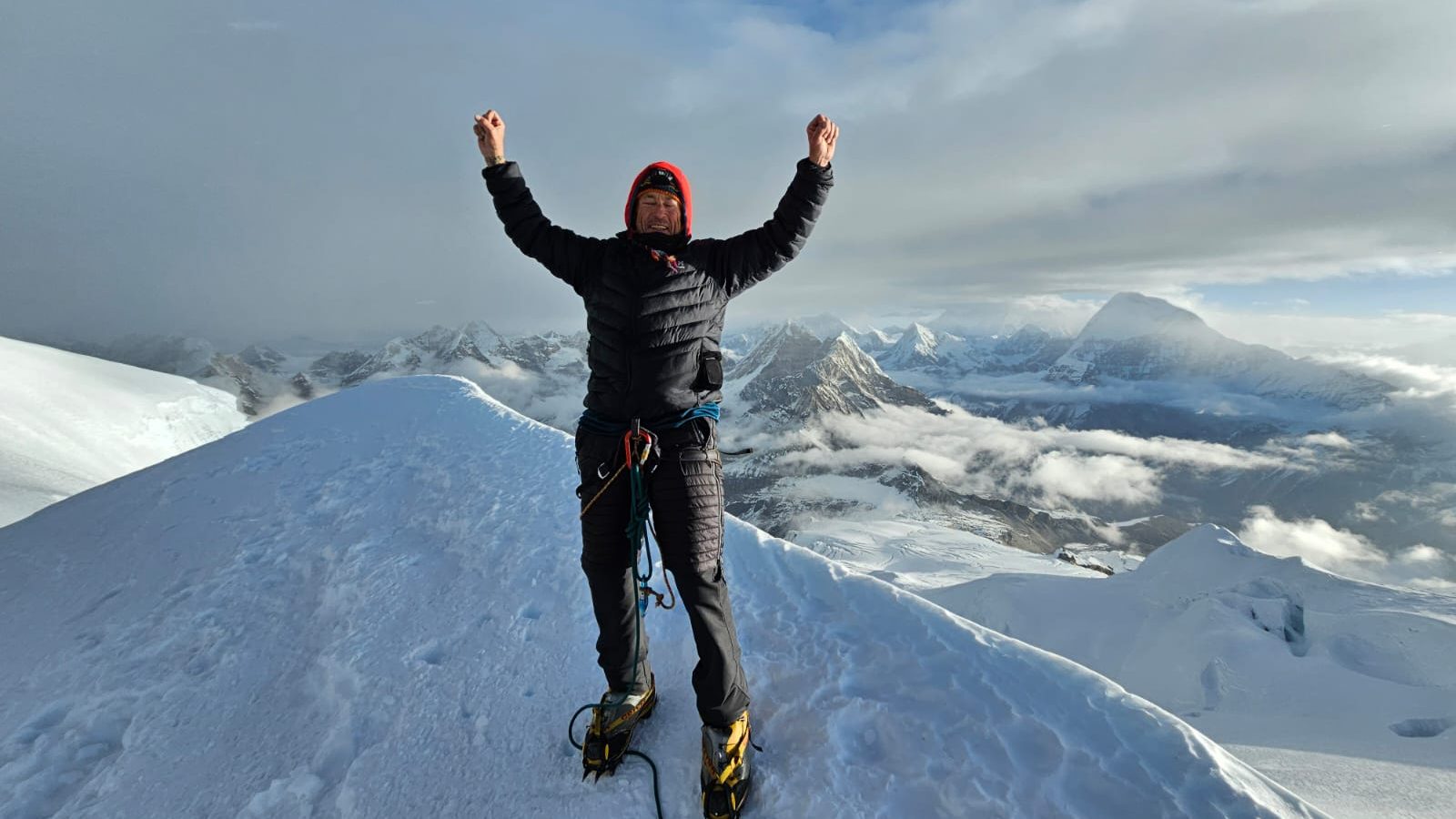
Jurgen Sollner, at age 64 in November 2024, an ex-marathon runner at the summit of Mera.

Often touted as the highest trekking peak in Nepal, Mera is renowned for its straightforward ascent and, more importantly, its utterly breathtaking panoramic summit views. From its lofty summit, you get an unparalleled 360-degree spectacle of five of the world’s six highest mountains: Mount Everest, Lhotse, Makalu, Cho Oyu, and Kangchenjunga. It’s a view that truly leaves you speechless.

While high in altitude, Mera Peak is technically less demanding than Island Peak or Lobuche East. Its long, gradual snow slopes are ideal for learning crampon technique, rope management, and testing your acclimatization to extreme heights in a relatively safe environment.


2. Island Peak (6,189m)

Officially known as Imja Tse, Island Peak is perhaps the most famous and visually striking of the three. Located in the Chhukung valley, its distinctive summit pyramid offers the biggest technical challenge. The climb involves navigating a glaciated terrain, crossing crevasses, and ascending a steep headwall with the assistance of fixed ropes and a Jumar (ascender).

Island Peak builds on the glacier skills learned on Mera, introducing you to steeper climbing, rappelling, and more significant exposure. It’s a crucial step in developing the technical proficiency and mental fortitude required for higher peaks.


3. Lobuche East (6,090m)

Often combined with the Everest Base Camp trek, Lobuche’s East Peak provides an incredible climbing challenge right in the heart of the Khumbu region, offering spectacular views of Everest, Lhotse, Nuptse, and Ama Dablam. It is often considered the most technically demanding of the three, featuring rock scrambling, steep snow and ice climbing, and navigating exposed sections along its stunning ridge.

Successfully climbing Lobuche East demonstrates a strong command of technical skills under high-altitude conditions. It’s an ideal test of your ability to perform complex maneuvers, manage risk, and maintain focus on challenging terrain, preparing you for the even greater demands of a 7,000m or 8,000m objective.


Why Sherpa Society?

Our family-run company, with over 50 years of Sherpa heritage, has guided countless climbers to these majestic summits. We understand the nuances of acclimatization, the critical importance of safety protocols, and the need for seamless logistics.

By choosing our custom multi-peak packages, you benefit from:

  • Expert Guidance: Our experienced Sherpa guides lead every step, ensuring your safety and success.
  • Hassle-Free Logistics: We handle all permits, documentation, equipment transport, and camp management.
  • Optimal Acclimatization: Our itineraries are carefully designed for safe and effective acclimatization.
  • Cost & Time Savings: Bundling peaks offers significant savings compared to separate expeditions.

If you’re looking to complete the [Island Peak, Lobuche East & Mera Peak Challenge] as a single, unforgettable expedition, or tackle them individually, our team is ready to craft your perfect Himalayan adventure.


Ready to elevate your climbing journey?

  • Explore our specific expeditions for [Mera Peak].
  • Discover the thrill of [Island Peak].
  • Take on the challenge of [Lobuche East Peak].
  • Or, [Contact us today] to discuss your custom [Three Peaks Combination Package]!
Essential Equipment for Technical Climbing

When ropes, harnesses, and specialized tools become essential, you’re stepping into the world of technical climbing – this is where gear takes on an entirely new level of importance. Here the most important elements are safety, efficiency, and ultimately, success and comfort on the most challenging terrain.

Specific gear lists vary depending on the objective (rock, ice, mixed, high-altitude), but here’s a breakdown of the core equipment categories for technical climbing.

Beyond Gear

Remember, your climbing gear is only as good as the knowledge of the person using it. Before any technical climb, ensure you have:

  • Formal Training: Take accredited courses in rock climbing, ice climbing, crevasse rescue, and self-arrest.
  • Experienced Partners: Climb with individuals who are more experienced than you, who can teach and mentor.
  • Gradual Progression: Start with easier routes and gradually increase the difficulty as your skills and confidence grow.

1. Personal Protective Equipment (PPE)

These are the items that directly keep you safe when you’re off the ground.

  • Climbing Harness: Your crucial link to the rope. Look for comfort, adjustable leg loops, and adequate gear loops for racking equipment.
  • Helmet: Non-negotiable! Protects against rockfall, icefall, and impacts from falls. Always wear one.
  • Belay Device & Locking Carabiners: Essential for belaying your climbing partner and rappelling. Ensure you have at least two locking carabiners for redundancy.
  • Slings & Cordelette: Versatile pieces of webbing or cord used for anchors, extending protection, and creating personal anchor systems.
  • Prusiks/Autoblock: Friction hitches used for ascending ropes or as backup on rappels.

2. Rope & Rope Management

The lifeline of climbing.

  • Climbing Ropes:
    • Dynamic Ropes: Designed to stretch and absorb the impact of a fall. Essential for lead climbing.
    • Static Ropes: Minimal stretch, ideal for rappelling, hauling loads, or fixing lines.
  • Rope Bag/Tarp: Keeps your rope organized, clean, and prevents tangles.

3. Footwear

Specialized shoes for specialized terrain.

  • Technical Mountaineering Boots: For high-altitude, ice, and mixed climbing. These are stiff, insulated, and compatible with crampons.
  • Climbing Shoes (for Rock): Tight-fitting, sticky-rubber shoes for maximum friction and precision on rock faces.
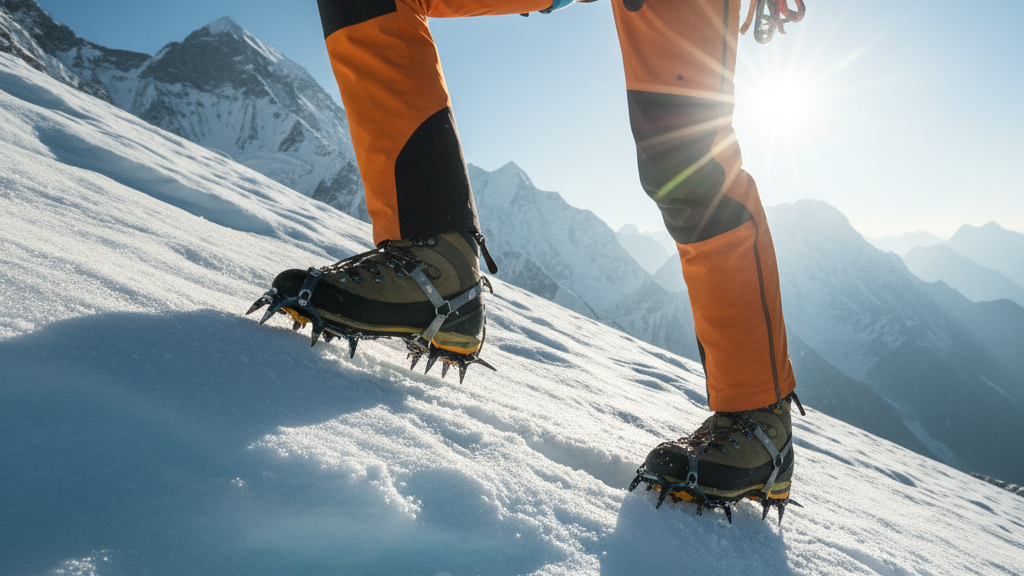
  • Crampons: Metal spikes that attach to your boots for traction on ice and hard snow. Choose models compatible with your boots (strap-on, semi-automatic, or automatic).

4. Ice Axes & Tools

Your extensions for biting into snow and ice.

  • Mountaineering Ice Axe: A single, straight-shafted axe for general mountaineering, self-arrest, and balance on snow slopes.
  • Technical Ice Tools (Pair): Shorter, more aggressively curved axes designed for vertical ice climbing and steep mixed terrain.

5. Protection & Anchoring

These are the tools used to secure the rope to the rock or ice.

  • Quickdraws: Two carabiners connected by a short sling, used to attach the rope to protection points on the rock.
  • Cams (Friends): Spring-loaded camming devices (SLCDs) that fit into cracks in the rock and expand to provide a secure anchor point.
  • Nuts (Chocks): Metal wedges of various sizes that are placed into constrictions in rock cracks.
  • Ice Screws: Hollow tubes with threads that are screwed into solid ice to create anchor points.
  • Pitons: Metal blades hammered into cracks in the rock (less common now but still used in certain situations).
  • Anchor Material: Longer slings, cordelette, and large locking carabiners for building secure anchor systems.

6. Navigation & Emergency

Never leave home without these.

  • Map, Compass, & GPS Device/App: Redundant navigation is crucial, especially in complex terrain.
  • Headlamp: With spare batteries! Essential for early starts or unexpected delays.
  • First Aid Kit: Comprehensive, customized for potential climbing injuries.
  • Knife/Multi-tool: For cutting cord, minor repairs, and emergencies.
  • Repair Kit: Duct tape, cordage, spare parts for critical gear.
  • Satellite Messenger/PLB (Personal Locator Beacon): For emergency communication in areas without cell service.

Technical climbing opens up a whole new world of mountain adventures, particularly peak climbing. As technology evolves the resources we use will open to more and more digital equipment. We’re seeing increasingly lighter, stronger, and more intuitive digital equipment emerging, including advanced satellite communication devices with weather forecasting capabilities to smart wearables that monitor health levels and vital signs at altitude. The future of climbing gear promises even greater precision and safety, potentially making once-impossible feats more attainable for future generations. With the right gear and, more importantly, the right training, you can safely explore the breathtaking vertical landscapes the Himalayas and other great ranges have to offer.

For those truly seeking to push their limits, you might also want to research Alpine Style climbing. This highly demanding technique involves carrying all your gear with you, moving quickly and efficiently up a mountain face without the use of fixed ropes, established camps, or external support (like high-altitude porters). It’s a minimalist, self-sufficient, and incredibly challenging approach that emphasizes speed and self-reliance, representing the pinnacle of high-altitude mountaineering for many.

Hiking in Canada? We’ve got you covered

If you’re someone from North America who plans to trek the rugged trails of the Himalayas, Andes, Patagonia or if you’re simply a fellow Canadian friend of ours who just wants some exercise, this post is for you. There’s no better place to get some fresh air than Canada’s stunning and demanding wilderness. So forget the treadmill; the key to successful trekking is long days, serious elevation, and an uneven, rocky trail.

The Canadian mountains, especially the Rockies and the Coast Mountains, are your perfect high-altitude prep school. Here are a few top-tier Canadian hikes that will forge the endurance, leg strength, and mental grit you need for your next big adventure.


The Canadian Rockies

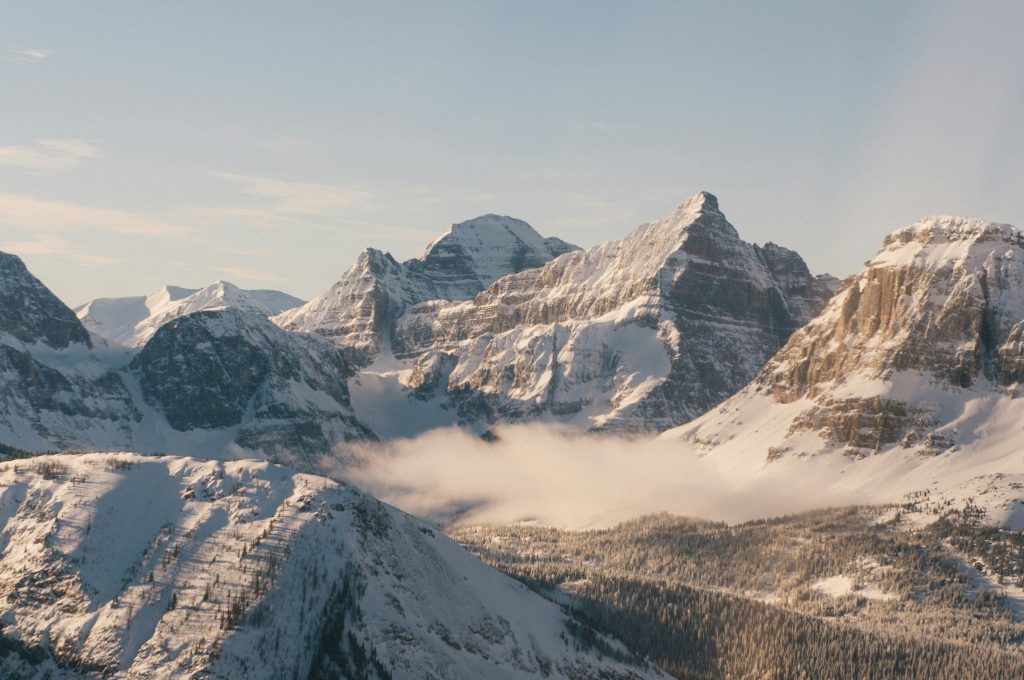
The Canadian Rockies/Canadian Rocky Mountains is the Canadian segment of North America’s Rocky Mountains, straddling the provinces of British Columbia (BC) and Alberta. They are famous for their sheer, intimidating peaks and offer some of the best-sustained climbing and multi-day treks to simulate the demands of high-altitude travel.

1. The Iceline Trail – Yoho National Park, BC

  • The Vibe: A breathtaking day hike or overnight loop that takes you into the alpine zone, right up close to glaciers and icefields.
  • Why it Preps You: It’s a gut-busting ascent right from the start, providing a significant elevation gain over a short distance. This is perfect for training your body to hike hard when your legs are already tired. The views are so rewarding you’ll forget you’re training!
  • Training Focus: Steep ascents and uneven terrain with a full pack if you do the overnight loop.

2. The Skyline Trail – Jasper National Park, AB

  • The Vibe: One of the most famous long-distance trails in the Rockies. Over two to four days, the majority of the hike is spent above the treeline—a fantastic simulation of high-altitude exposure (without the low oxygen).
  • Why it Preps You: This trail will test your endurance over multiple days of sustained effort with a full pack. You’ll cover long distances, tackle varied terrain (including a high pass), and experience unpredictable weather—all essential for a major trek.
  • Training Focus: Multi-day endurance, pack weight management, and mental resilience in exposed landscapes.

3. Sentinel Pass – Banff National Park, AB

  • The Vibe: A popular but spectacular day hike near Moraine Lake, known for the Larch Valley in the fall (a must-see!).
  • Why it Preps You: The trail features a long, steady climb followed by an incredibly steep series of switchbacks up to the pass. This forces you to use the “trekker’s pace”—slow, steady, and relentless—which is the key to conquering high passes elsewhere in the world.
  • Training Focus: Slow-and-steady pacing on steep grades and high-step leg work.

Coastal & Western Canada: Rugged and Technical

For a different type of challenge that focuses on technical footwork, long climbs through dense forests, and a true test of grit, look to the Coast Mountains.

4. The Grouse Grind – Vancouver, BC

  • The Vibe: Affectionately known as “Nature’s Stairmaster,” this is a punishing 2.9 km trail straight up Grouse Mountain.
  • Why it Preps You: While it’s short, it’s a pure, relentless cardio burn with a massive elevation gain in a small package. This is a non-stop leg and lung workout that will improve your cardiovascular fitness faster than almost anything else. It’s the perfect mid-week training hit.
  • Training Focus: Cardiovascular capacity and stair-climbing strength (great for those long days of ascent).

5. West Coast Trail – Pacific Rim National Park, BC

  • The Vibe: A world-renowned 75 km backpacking route along the rugged and often muddy coastline of Vancouver Island.
  • Why it Preps You: This trek is a total body workout that demands balance, core strength, and technical foot placement. You’ll be climbing up and down hundreds of ladders, navigating deep mud, crossing rivers, and scrambling over root systems. If you can handle the WCT, you can handle almost any trail.
  • Training Focus: Technical balance, core strength, and all-weather preparation.

The Trek Prep Checklist

Your Canadian training hikes aren’t just about fitness; they’re about dialing in your trek strategy.

  • Test Your Gear: Treat your training hikes like mini-expeditions. Wear your trekking boots (break them in!), use your trekking poles, and pack the backpack you plan to take overseas with a similar weight. Find out what chafe points need addressing now, not on day three of your main trek.
  • Practice Your Pace: The secret to high-altitude trekking is being “unpleasantly comfortable.” You should be able to hold a conversation while hiking. Use Canada’s tough climbs to find and maintain that steady, conversational pace.
  • Eat and Drink: Practice eating and drinking on the move. Dehydration and under-fueling are trip killers. Get used to consuming two to three litres of water and calorie-dense snacks throughout the day.

Lace up those boots! The world’s great trails are waiting, and your Canadian training ground is the perfect place to get ready.

Best Trekking Brands 2025

So, you’ve decided to answer the call of the wild, and your next big adventure is a trek that promises breathtaking views and a test of endurance. Before you hit the trail, there’s one crucial step: gearing up.

Your equipment is your shelter, protection, and best friend in the mountains. When it comes to trekking, the brand you choose can be the difference between a summit and failure.

We’ve scoured the peaks and valleys of the outdoor world to bring you a roundup of the top trekking gear brands, helping you choose durable, high-performance kit that will keep you safe, warm, and comfortable, no matter what the trail throws at you.


The Gold Standard: Brands Trusted by Mountaineers

These brands have built their reputations on decades of equipping serious adventurers for the most extreme conditions. If budget allows, you can’t go wrong with these investment pieces.

Patagonia

Patagonia has earned its legendary status not just for making durable outdoor apparel, but for its unwavering commitment to ethical and environmental activism. They famously use their business as a tool to fight the climate crisis, going so far as to donate their profits to environmental causes. This core mission, matched with the exceptional quality of their clothing—especially their trail-tested base layers and fleeces—makes them a favorite among trekkers who value sustainability as much as longevity in their gear.

Arc’teryx

Often called the “Range Rover” of the outdoor world, Arc’teryx is the brand of choice for those who demand technical perfection. The company is known for its minimalist, sleek designs and obsessive focus on high-performance shells and jackets. By utilizing advanced fabrics like Gore-Tex and developing precise, ergonomic patterning, Arc’teryx gear offers unparalleled weather protection and mobility. If your adventure involves technical terrain or extreme, wet climates, their streamlined and highly functional outerwear is the industry benchmark.

The North Face

A household name for a reason, The North Face represents all-around excellence in outdoor gear for generations. They successfully balance top-tier performance with a recognizable, modern aesthetic, making them as popular on city streets as they are on mountain trails. They particularly excel in innovative insulation, from their iconic puffy jackets featuring advanced down alternatives like Thermoball™ to reliable backpacks and tents. For versatile, cutting-edge gear that never sacrifices style, The North Face remains a global leader.

Mammut

Hailing from Switzerland, Mammut specializes in the most demanding category of the outdoors: true mountaineering and technical climbing. This brand is built around safety, precision, and extreme durability, which is evident in their high-quality ropes, harnesses, and safety-focused apparel. Mammut’s gear is specifically engineered for high-altitude environments, offering the kind of robust, reliable performance that gives trekkers and climbers confidence when facing the most challenging alpine conditions. Sources


The Essentials: Footwear, Packs, and Sleeping Systems

A trekker is only as good as their boots, pack, and sleep system. Here are the brands that dominate these core categories:

Boots & Footwear

  • Merrell: Famous for the supremely comfortable and widely popular Moab series. They offer great out-of-the-box comfort for day hikes and moderate treks.
  • Salomon: Known for their technical fit and aggressive traction. If you need speed and stability on rugged trails, their hiking shoes and trail runners are a top pick.
  • Lowa: A German brand specializing in high-quality, long-lasting leather and synthetic trekking boots that offer superior support for heavy loads and challenging terrain.

Backpacks

  • Osprey: Arguably the most popular backpacking brand globally. Their packs are celebrated for innovative features like adjustable torso lengths and exceptional ventilation (to keep your back from getting too sweaty).
  • Deuter: A German brand that consistently produces durable, comfortable packs. They often use a “floating” back system to improve air circulation—a godsend on hot days.

Tents & Sleeping Bags

  • Marmot: Offers a wide range of reliable tents, bags, and outerwear known for their great balance of price, weight, and performance.
  • REI Co-op: The in-house brand of the popular outdoor retailer offers exceptional value. Their tents and sleeping bags are a fantastic entry point for beginners, providing solid quality without the premium price tag.

Tips for Choosing Your Brand

The right gear is more important than the most expensive. It’s important to find the one that fits your adventure as well as your body.

  1. Define Your Trip: Are you on a weekend hike or a 10-day expedition? The equipment for a mild coastal path is very different from a high-altitude mountaineering route. Choose brands that specialize in your required conditions.
  2. Prioritize the Core: Invest the most in your Boots and Backpack. Poor-fitting shoes mean blisters; a poor-fitting pack means back pain.
    • Pro Tip for Boots: Go to a specialized store and get your feet measured. Try boots on with the socks you plan to wear.
  3. Check their ‘Why’: Many modern outdoor brands, like Patagonia and Fjällräven, are leading the way in sustainability. If you care about eco-friendly and ethical production, make their mission part of your decision.
  4. Layer Up, Don’t Bulk Up: Look for brands that excel in base and mid-layers (Smartwool for merino wool socks and base layers is a must!) Your clothing should follow the three-layer principle: wicking base, insulating mid, and protective shell.

While high-quality trekking gear brands offer incredible features and durability, remember that the most important element of any trek is your preparation and spirit. Research, choose wisely, and then get out there.

Happy Trails!

Mont Blanc: Roof of the Alps

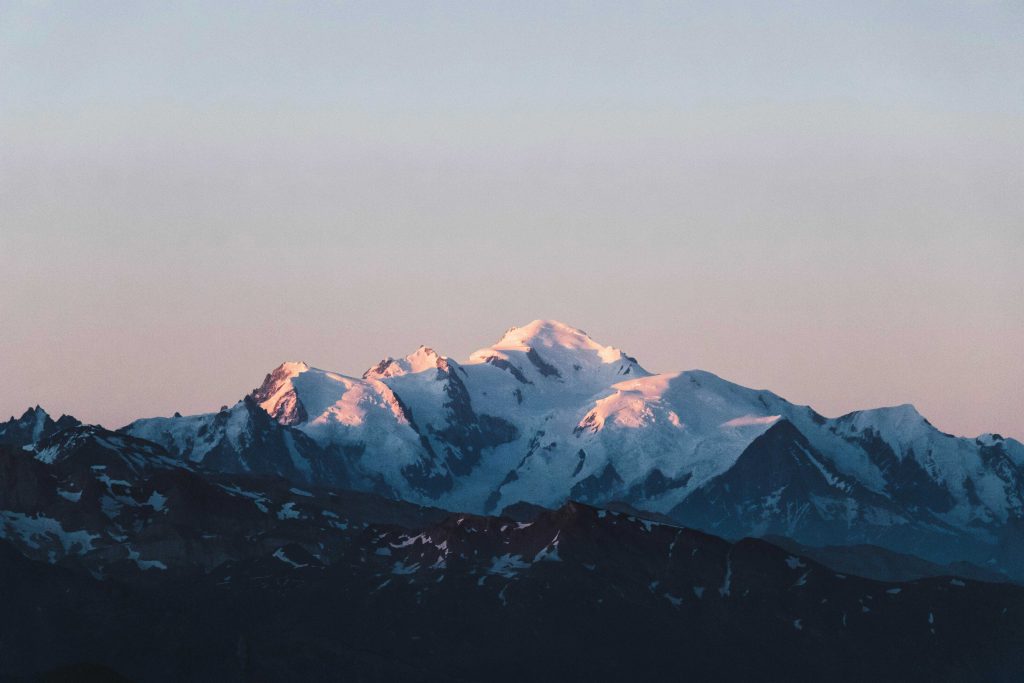
This snow, jagged peak is the quintessential challenge of the Alps. The highest in Western Europe, Mont Blanc (simply White Mountain or Monte Bianco in Italian) is a massif straddling the borders of France and Italy, with its vast shadow touching Switzerland as well. It’s the birthplace of modern mountaineering and a mecca for outdoor enthusiasts worldwide.

The Crown of the Alps: The Facts

Standing at an elevation of approximately 4,809m (15,777 ft), Mont Blanc’s height is constantly shifting due to its permanent ice and snow cap. It’s a geological marvel, predominantly formed from a massive granite intrusion.

The mountain’s human history is just as grand. The first recorded ascent in 1786 by Jacques Balmat and Dr. Michel-Gabriel Paccard, is traditionally marked as the beginning of modern mountaineering. Today, around 20,000 climbers attempt the summit annually, a testament to its enduring allure.

The Ultimate Alpine Adventure: The Tour du Mont Blanc (TMB)

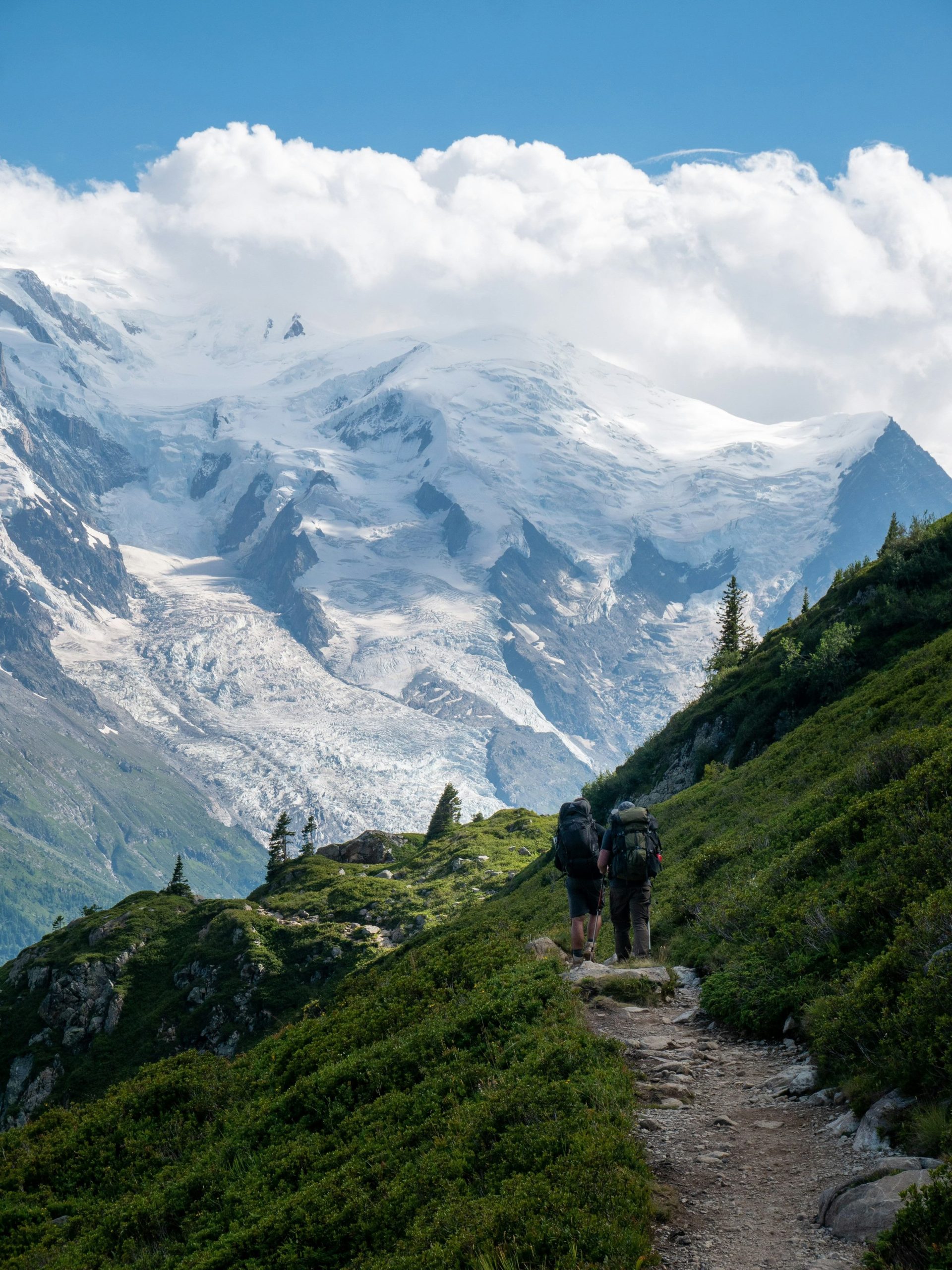
While summiting Mont Blanc is a serious mountaineering undertaking, the region is most famous for a different kind of challenge: the Tour du Mont Blanc (TMB), which on the contrary is not a climb up the mountain, but a legendary 170km (106-mile) circuit that winds around the entire massif, offering hikers an unparalleled journey through three countries: France, Italy, and Switzerland.

What to Expect on the TMB:

  • Three Countries, One View: The trail treats you to the distinct cultures, cuisines, and architectural styles of the Chamonix Valley in France, the Aosta Valley in Italy (home to the picturesque town of Courmayeur), and the Val Ferret in Switzerland.
  • Epic Views and Terrain: You will traverse high alpine passes, skirt colossal glaciers, wander through lush meadows dotted with wildflowers, and pass by charming stone hamlets. The cumulative elevation gain and loss is close to 10,000 meters (about 32,800 feet)—a serious, but immensely rewarding, physical challenge.
  • Duration: The classic TMB itinerary is typically completed in 10 to 12 days, hiking stage-by-stage and staying in mountain huts (known as refuges in France and Italy) or valley accommodations. Faster hikers can complete it in 7-9 days, while more leisurely trekkers might take up to 14.
  • Refuge Life: A highlight of the TMB is the mountain hut experience. Imagine arriving at a cozy refuge after a long day, sharing a hearty, traditional meal with fellow trekkers from around the world, and sleeping under a million stars. It’s a genuine taste of alpine life.

Planning Your Mont Blanc Trek

Thinking of tackling the TMB? Here are the essentials:

  1. When to Go: The peak hiking season is mid-June to mid-September.
    • Early Season (June): Quieter, but you may encounter more snow on the high passes, requiring caution and possibly extra gear. Wildflowers are at their best.
    • Peak Season (July & August): Warmest weather and guaranteed clear trails, but also the busiest months on the trail and in the accommodations.
    • Late Season (September): Excellent for avoiding crowds, with stable weather and often crisp, clear days, but some huts may begin to close after the first or second week.
  2. Direction: Most people hike counter-clockwise, starting from a point like Les Houches or Chamonix in France. However, hiking clockwise is a great way to avoid the majority of the crowds.
  3. Logistics: The TMB can be done independently, booking refuges and carrying all your gear (or utilizing baggage transfer services), or as part of a guided tour. Booking accommodation well in advance is crucial, especially for the high season.

Beyond the TMB

The Mont Blanc massif offers much more than just the circuit trek:

Aiguille du Midi: Don’t miss the thrilling cable car ride from Chamonix to the Aiguille du Midi station (3,842m), where you can step out onto a glass box (“Step into the Void”) for a breathtaking view of the Mont Blanc peak.

Day Hikes: Iconic day hikes abound, such as the trek to Lac Blanc, famous for its stunning reflection of the Mont Blanc chain.

Chamonix: The vibrant valley town of Chamonix is the adventure capital of the Alps, offering world-class climbing, paragliding, and trail running.

Mont Blanc is a spectacle that captures the soul and defines the majesty of the high Alps. It awaits your footsteps, ready to inspire.

Failed Summit? Find Victory in the Journey

For many trekkers, the goal of reaching a summit represents the pinnacle of their adventure, from the motivation before the journey to the thrill of the reaching the top to the pride you feel after.

But what happens when it doesn’t work out quite as planned? You may feel like you’ve fallen short. This article is here to tell you your journey is still filled with victories worth celebrating, and why your trek is so much more than just the final peak.

1. Part of the Journey

First thing to note is that we all experience it. Every climber who has successfully climbed a peak, has failed beforehand. And so this is not a be all end all moment.

2. The Experience is more than the Summit

Reaching the top of a mountain is only a small part of what makes trekking meaningful. It’s the journey that truly shapes the adventure – the days spent navigating mountain trails, waking up to the sound of nature, and witnessing breathtaking landscapes that are impossible to see anywhere else.

Every step you’ve taken is a victory in itself. Whether it’s crossing icy rivers, climbing through steep passes, or meeting new people along the way, those experiences can only be found in the Himalayas. The bonds you form with fellow trekkers, the unique cultural exchanges with local guides, and the natural beauty that surrounds you—all of these moments are treasures that no summit can take away.

3. Physical and Mental Resilience

One of the most rewarding aspects of trekking is discovering your inner strength. Even if you didn’t reach the summit, think of what you accomplished. You pushed yourself physically and mentally through high altitudes, unpredictable weather, and rough terrain. Surpassing significant milestones, like breaking the 5,000m barrier, showcases your resilience and determination. These achievements allow you to understand your limits more precisely, making you more equipped for future challenges.

The mountains teach us humility. The weather can change in an instant, health issues might arise, or the altitude may become overwhelming. Making the decision to turn back is one of the hardest choices for a climber, but it’s also one of the most intelligent. It means you’ve listened to your body and the mountain—a sign of wisdom and strength.

4. Growth, Not Perfection

Many of the greatest mountaineers and adventurers have stories of not making it to the summit. The mountain will always be there, and there’s no shame in returning without conquering it. In fact, it sets the stage for growth—giving you a renewed perspective and the hunger to try again.

Adventure is not about perfection; it’s about progression. With every trek you undertake, you gain more skills, experience, and knowledge. The next time you attempt a climb, you’ll know what to expect, how to better prepare, and how to respect your limits.

5. The Beauty of Returning Another Day

There’s always a chance to come back. Mountains aren’t going anywhere, and a return summit always makes a great comeback story. Returning to a trek you’ve already experienced can be incredibly rewarding. With your newfound knowledge and mental toughness, the next attempt may lead to a different outcome. And if it doesn’t? You still win by giving it your all.

6. Your Trek is Unique

Remember, every trekker’s experience is unique. Maybe you didn’t reach the peak, but your journey isn’t comparable to anyone else’s. You have your own stories of perseverance, hardship, and personal triumph. It’s about recognizing the value in your own adventure, without letting the summit define its worth.

Celebrate Your Achievements

Nature in the shape of the mountains will always humble us. Not making it to the top doesn’t diminish your journey or your accomplishment. Instead, it adds depth to your story, teaches you patience, and leaves room for future adventure.

It’s easy to focus on what didn’t happen. But celebrate every personal best, every tough decision and incredible view that will stay with you for a lifetime. From a grander scheme of things, you may just be one day grateful on what you learned form this trip alone. You’ve already succeeded in ways that many dream of; surpassing altitude barriers and pushing your limits. The summit is only a part of the whole picture and the Himalayas will always be there, waiting for your return, stronger and more determined.